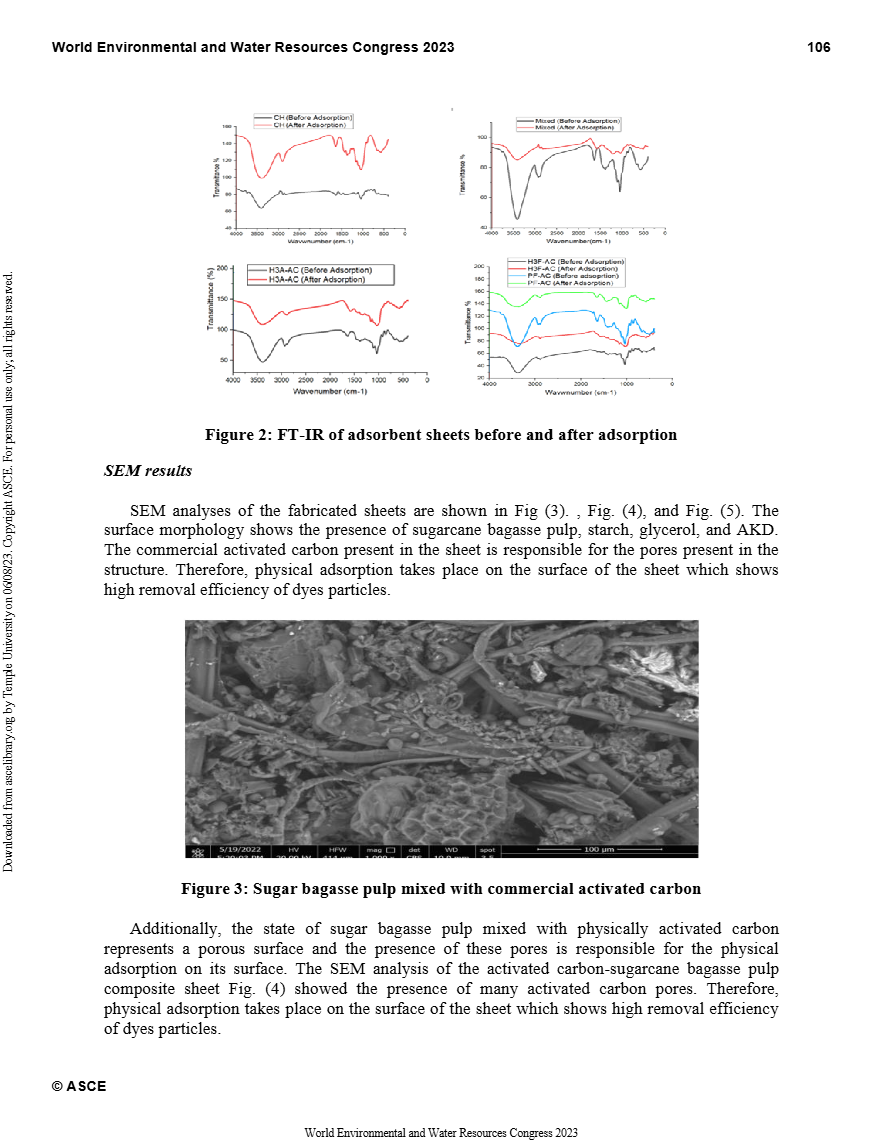
Valorization of Agricultural and Marine Waste for Fabrication of Bio-Adsorbent Sheets
Industrial wastewater often contains considerable amounts of toxic pollutants that would endanger public health and the environment. In developing countries, these toxins are often discharged into natural ecosystems without pretreatment as it requires costly treatment processes, which causes long-term harmful socioeconomic impacts. Employing wastewater treatment plants using physical, biological, and chemical methods to clean the wastewater is considered by many nations the answer to the environmental crises. The treated water could be used for targeting the irrigation systems in its majority
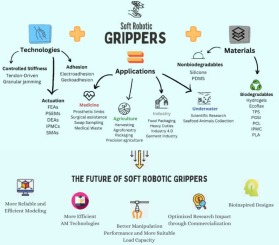
Soft robotic grippers: A review on technologies, materials, and applications
The growing need for manipulators capable of handling delicate objects with care and coexisting safely with humans has brought soft robots to the forefront as a practical and cost-effective solution. In this context, this paper aims to explore soft grippers, a unique and versatile subset of soft robots. It provides an overview of various soft grasping techniques and materials, highlighting their respective advantages and limitations, along with showcasing several designed and tested models. As medicine and agriculture are acknowledged as pivotal domains required for basic human survival, this
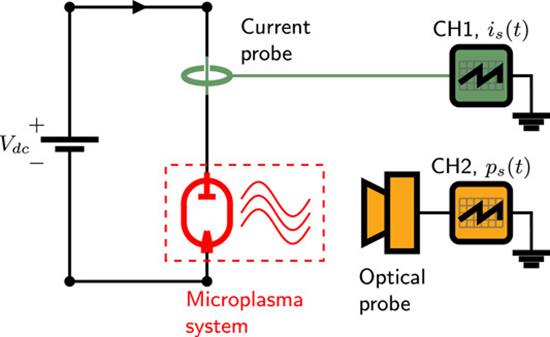
Parallel random bitstreams from a single source of entropy based on nonthermal electrochemical microplasma
This study presents the simultaneous generation of two uncorrelated and continuous high-quality random bitstreams originating from a single physical system based on confined, nonthermal electrochemical microplasma operating under atmospheric conditions. The randomness is intrinsically inherited from the time-resolved electrical current and optical emission intensities of the microplasma system, which were collected using wide bandwidth current probe and photodetection device. The parallel bitstreams pass unambiguously all 15 NIST SP 800-22 statistical tests without the need for any data post
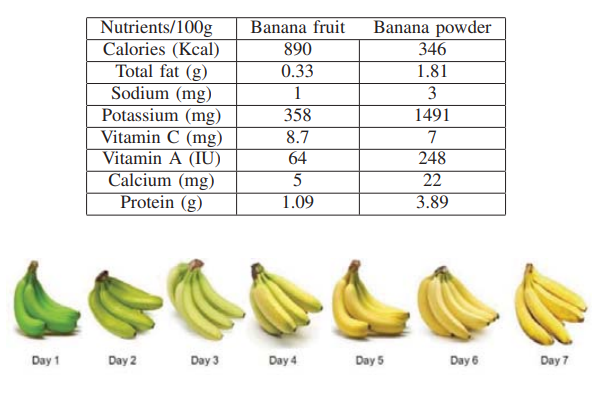
Banana ripening and corresponding variations in bio-impedance and glucose levels
This paper studies banana fruit ripping using the Cole-impedance model fitted over the measured bio-impedance data by monitoring the changes in the model parameters during the different ripping stages. A set of twenty bananas are tested for 84 hours, and impedance measurements are done every 12 hours using an SP150 electrochemical station. The changes in model parameters are related to the physical changes in the fruit as well as with the glucose concentration, which increases with time. © 2019 IEEE.

Experimental investigation of innovative active packaging biofilms using electrical impedance spectroscopy

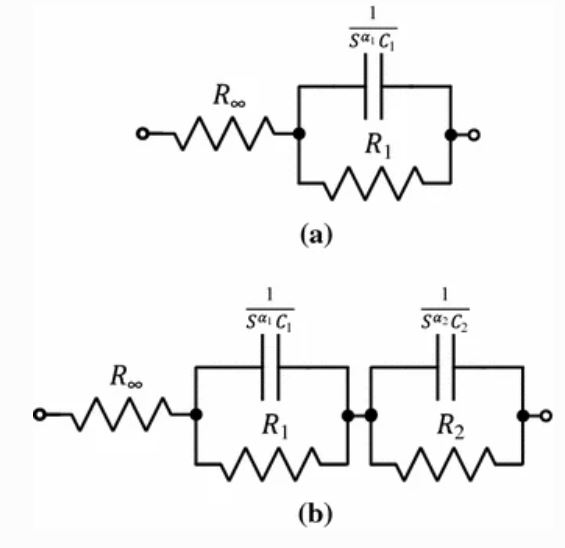
Extending the double-dispersion Cole–Cole, Cole–Davidson and Havriliak–Negami electrochemical impedance spectroscopy models
Double-dispersion impedance models are important for the accurate fitting of spectral impedance measurements in Electrical Impedance Spectroscopy (EIS). While the Cole–Cole model is the most widely known, it is possible to define double-dispersion Cole–Davidson and Havriliak–Negami models as well. In this work, we show that more freedom can be exercised when these three models are combined together and that this combination can be done in various forms. Experimental results using a two-stage optimization algorithm applied on the suggested models are provided. © 2021, European Biophysical
Extraction of Phase Information from Magnitude-Only Bio-impedance Measurements Using a Modified Kramers–Kronig Transform
The need for portable and low-cost bio-impedance analyzers that can be deployed in field studies has significantly increased. Due to size and power constraints, reducing the hardware in these devices is crucial and most importantly is removing the need for direct phase measurement. In this paper a new magnitude-only technique based on modified Kramers–Kronig transforms is proposed and tested. Comparison with impedance measurements of fresh and aging tomato samples using a precise industry standard impedance analyzer is carried out and explained. Error and noise analysis of the proposed
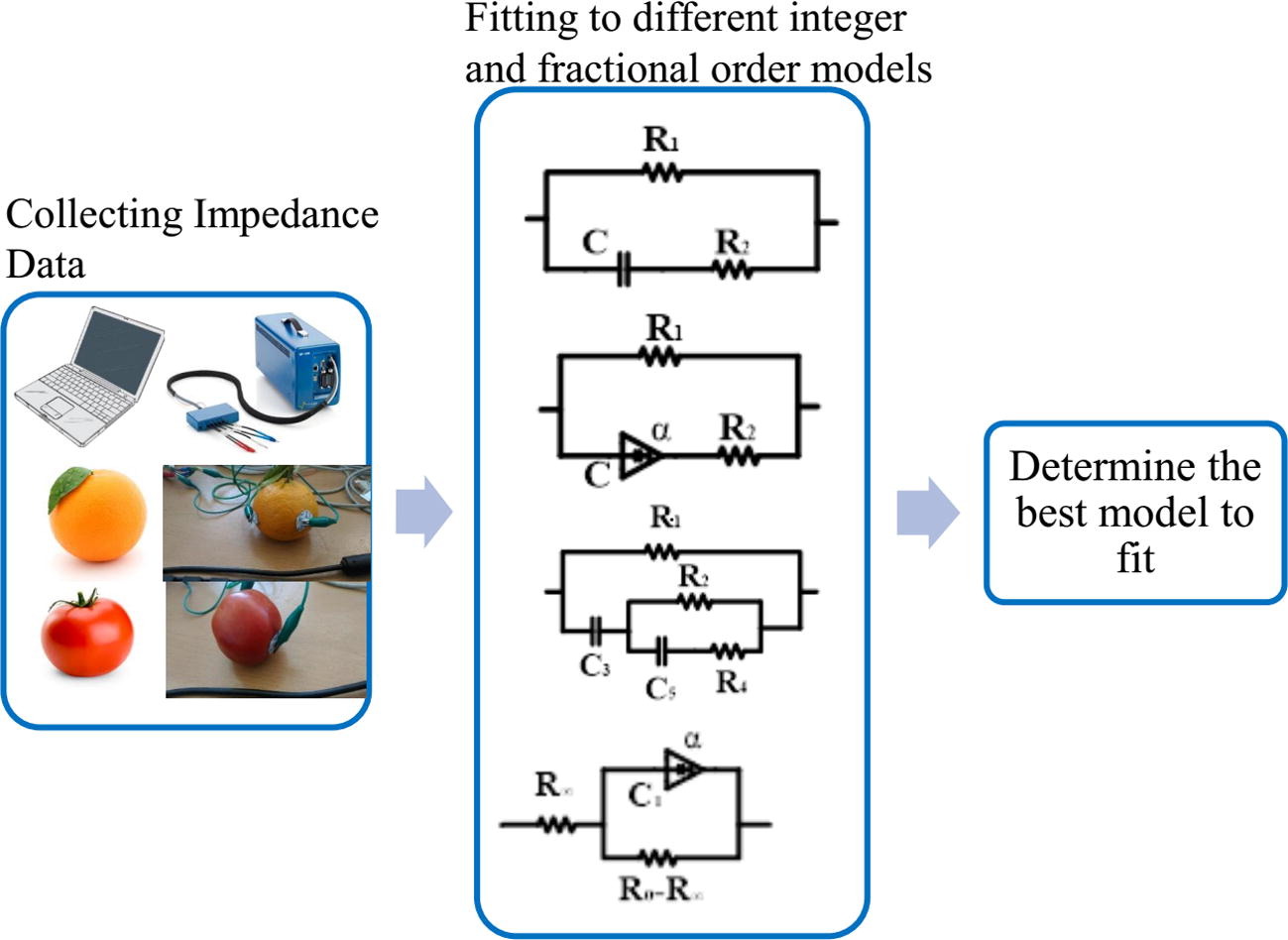
Experimental comparison of integer/fractional-order electrical models of plant
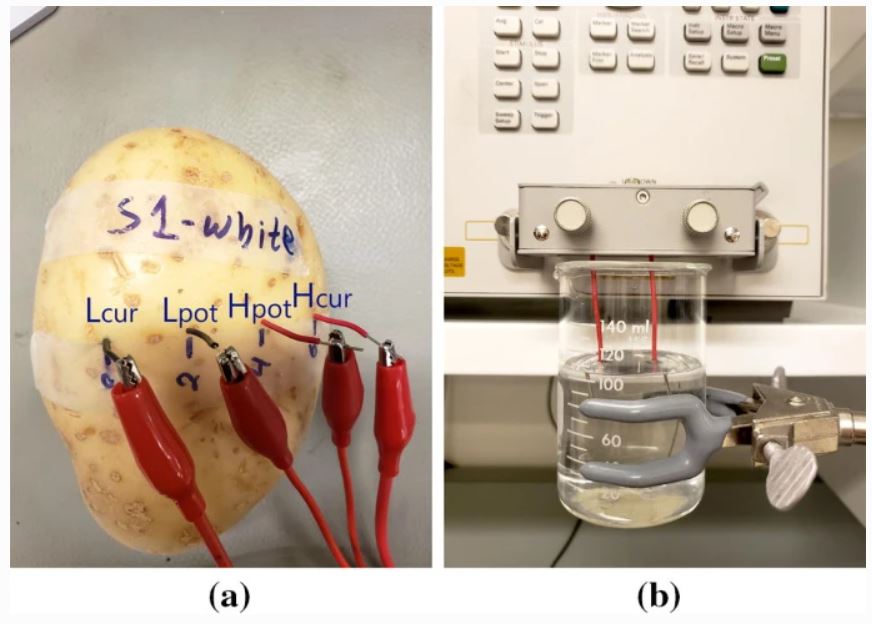
Extraction of bioimpedance phase information from its magnitude using a non-uniform Kramers–Kronig transform
A novel non-uniform Kramers–Kronig Transform algorithm for bioimpedance phase extraction is proposed and tested in this work. The algorithm error is studied and compared with a previously proposed phase extraction technique, also based on the Kramers–Kronig transform. Results using simulated datasets and experimental datasets confirm the excellent performance of the algorithm. © 2020, European Biophysical Societies' Association.