
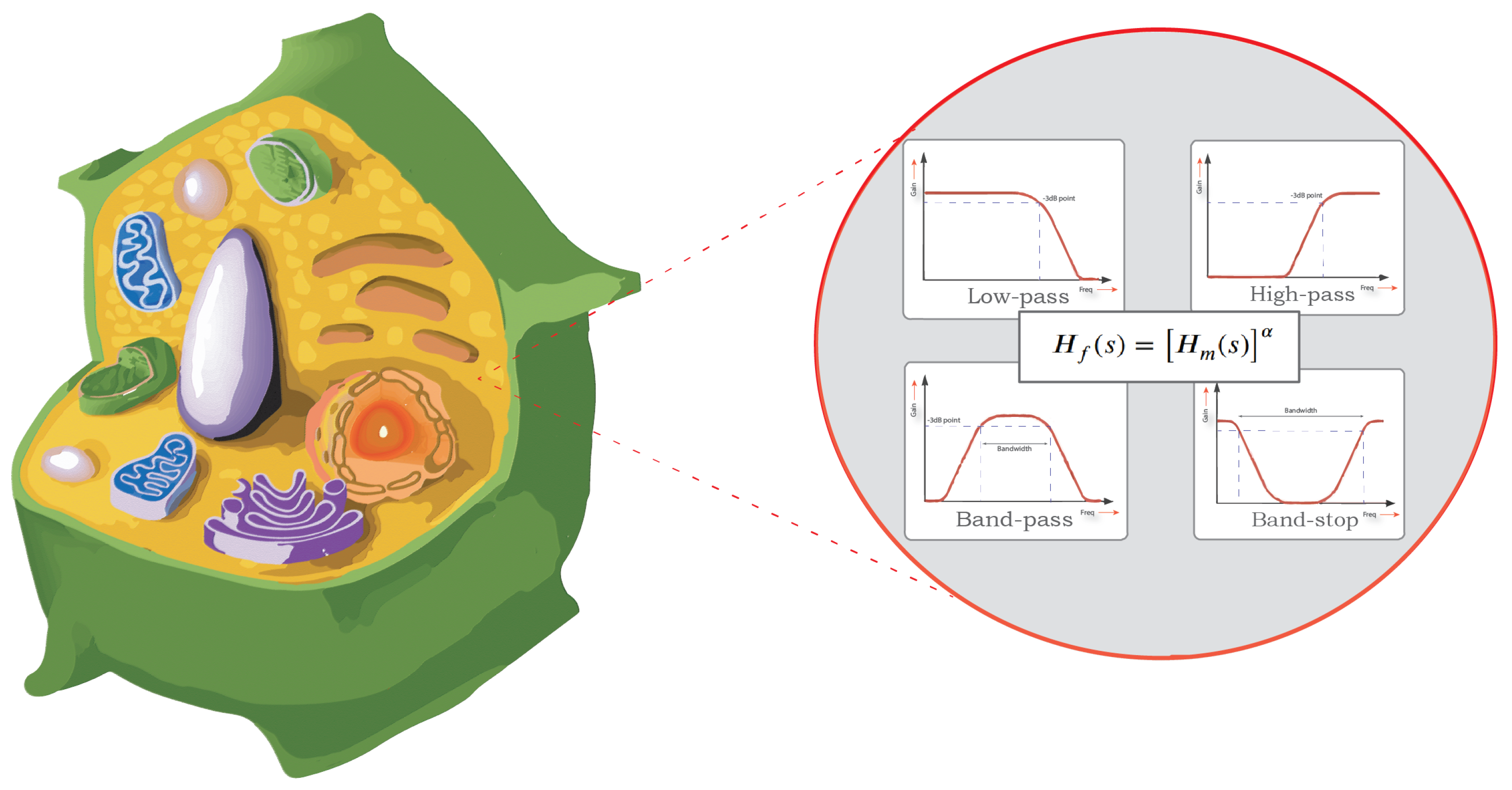
Plant Tissue Modelling Using Power-Law Filters
Impedance spectroscopy has became an essential non-invasive tool for quality assessment measurements of the biochemical and biophysical changes in plant tissues. The electrical behaviour of biological tissues can be captured by fitting its bio-impedance data to a suitable circuit model. This paper investigates the use of power-law filters in circuit modelling of bio-impedance. The proposed models are fitted to experimental data obtained from eight different fruit types using a meta-heuristic optimization method (the Water Cycle Algorithm (WCA)). Impedance measurements are obtained using a

Modeling woody plant tissue using different fractional-order circuits
This chapter presents results on the most suitable bio-impedance circuits for modeling woody plants. The modified double-shell, the modified triple Cole-Cole, and the traditional wood circuit models are compared for fitting experimentally measured data. Consequently, a modified circuit model is proposed. This model gives the best results for all interelectrode spacing distances when compared to the other circuits. All impedance data have been measured using the research-grade SP150 electrochemical station in the frequency range 0.1 Hz to 200 kHz. The fitting is done using the Zfit of the
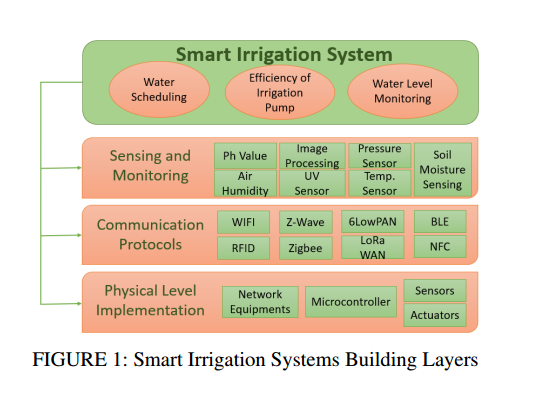
Smart Irrigation Systems: Overview
Countries are collaborating to make agriculture more efficient by combining new technologies to improve its procedure. Improving irrigation efficiency in agriculture is thus critical for the survival of sustainable agricultural production. Smart irrigation methods can enhance irrigation efficiency, specially with the introduction of wireless communication systems, monitoring devices, and enhanced control techniques for efficient irrigation scheduling. The study compared on a wide range of study subjects to investigate scientific approaches for smart irrigation. As a result, this project
Ternary SRAM circuit designs with CNTFETs
Static random-access memory (SRAM) is a cornerstone in modern microprocessors architecture, as it has high power consumption, large area, and high complexity. Also, the stability of the data in the SRAM against the noise and the performance under the radian exposure are main concern issues. To overcome these limitations in the quest for higher information density by memory element, the ternary logic system has been investigated, showing promising potential compared with the conventional binary base. Moreover, carbon nanotube field effect transistor (CNTFET) is a new alternative device with
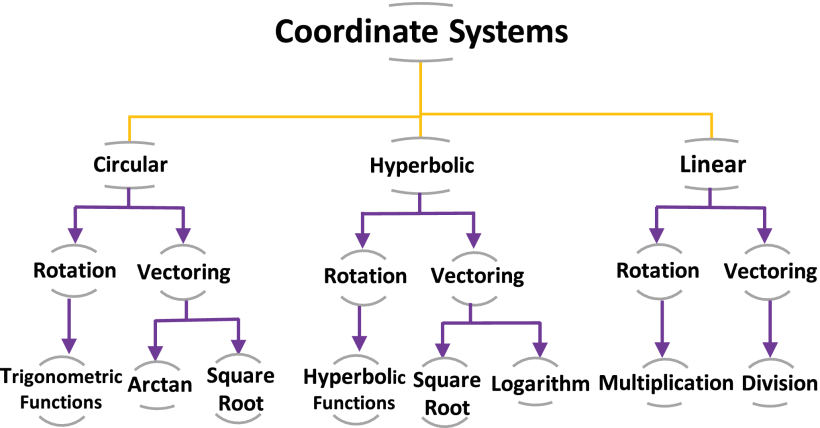
FPGA Implementation of Reconfigurable CORDIC Algorithm and a Memristive Chaotic System with Transcendental Nonlinearities
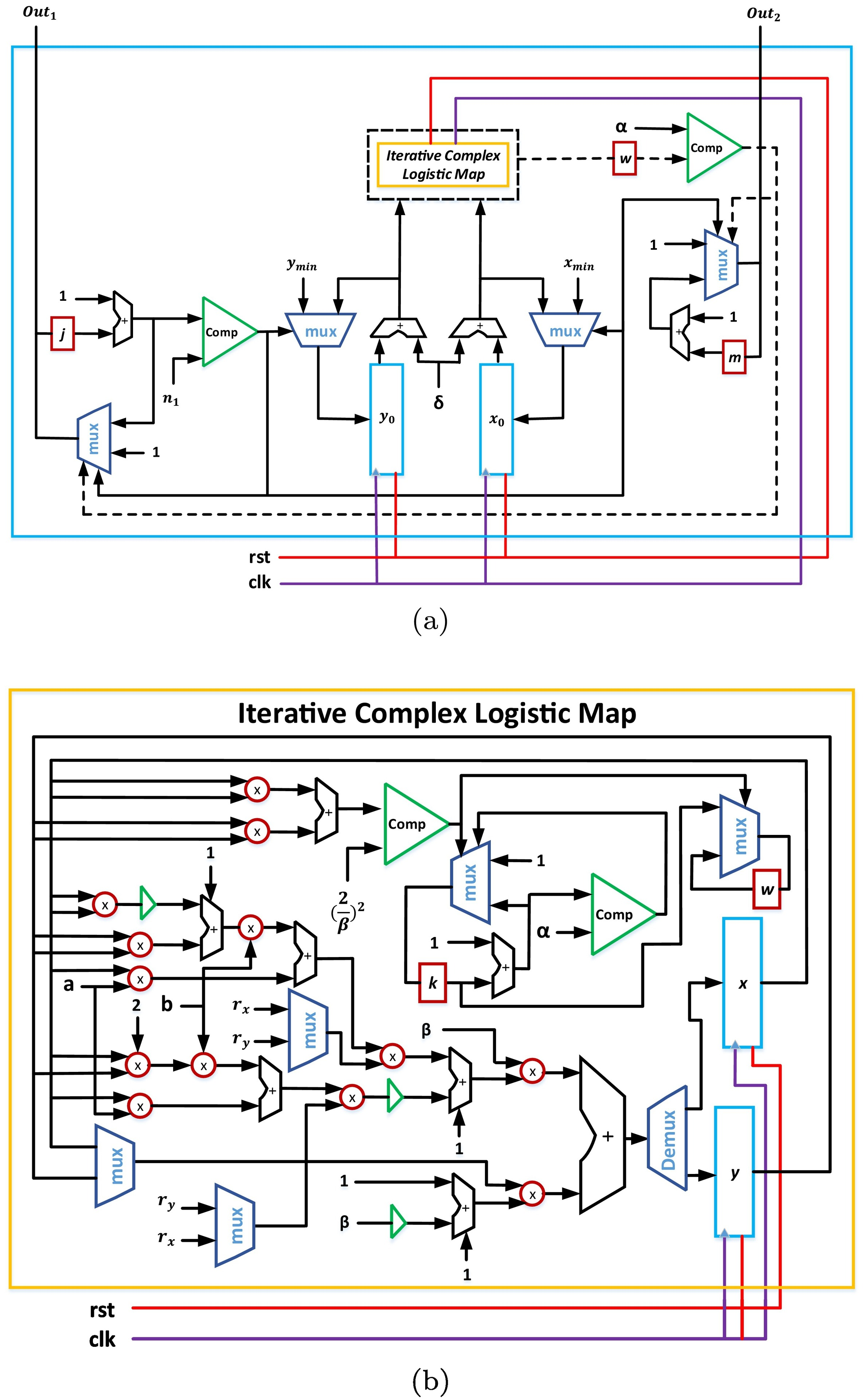
Coordinate Rotation Digital Computer (CORDIC) is a robust iterative algorithm that computes many transcendental mathematical functions. This paper proposes a reconfigurable CORDIC hardware design and FPGA realization that includes all possible configurations of the CORDIC algorithm. The proposed architecture is introduced in two approaches: multiplier-less and single multiplier approaches, each with its advantages. Compared to recent related works, the proposed implementation overpasses them in the included number of configurations. Additionally, it demonstrates efficient hardware utilization
FPGA realization of fractals based on a new generalized complex logistic map
This paper introduces a new generalized complex logistic map and the FPGA realization of a corresponding fractal generation application. The chaotic properties of the proposed map are studied through the stability conditions, bifurcation behavior and maximum Lyapunov exponent (MLE). A relation between the mathematical analysis and fractal behavior is demonstrated, which enables formulating the fractal limits. A compact fractal generation process is presented, which results in designing and implementing an optimized hardware architecture. An efficient FPGA implementation of the fractal behavior

Commercial Versus Natural Activated Carbon Fabricated Sheets: Applied to Dyes Removal Application
Industrial dyes are considered one of the main causes of increased water pollution of water. Many businesses, such as steel and paper, are located along riverbanks because they require large amounts of water in their manufacturing processes, and their wastes, which contain acids, alkalis, dyes, and other chemicals, are dumped and poured into rivers as effluents. For example, chemical enterprises producing aluminum emit a significant quantity of fluoride into the air and effluents into water bodies. Fertilizer facilities produce a lot of ammonia, whereas steel plants produce cyanide. Many
CNTFET-based ternary address decoder design
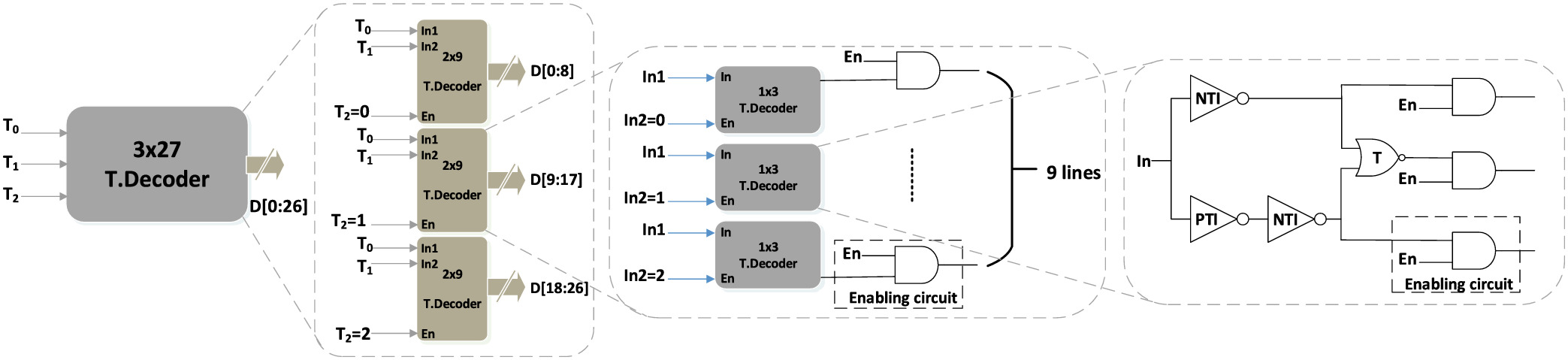
With the end of Moore's law, new paradigms are investigated for more scalable computing systems. One of the promising directions is to examine the data representation toward higher data density per hardware element. Multiple valued logic (MVL) emerged as a promising system due to its advantages over binary data representation. MVL offers higher information processing within the same number of digits when compared with binary systems. Accessing memory is considered one of the most power- and time-consuming instructions within a microprocessor. In the quest for building an entire ternary
Bio-inspired adsorption sheets from waste material for anionic methyl orange dye removal
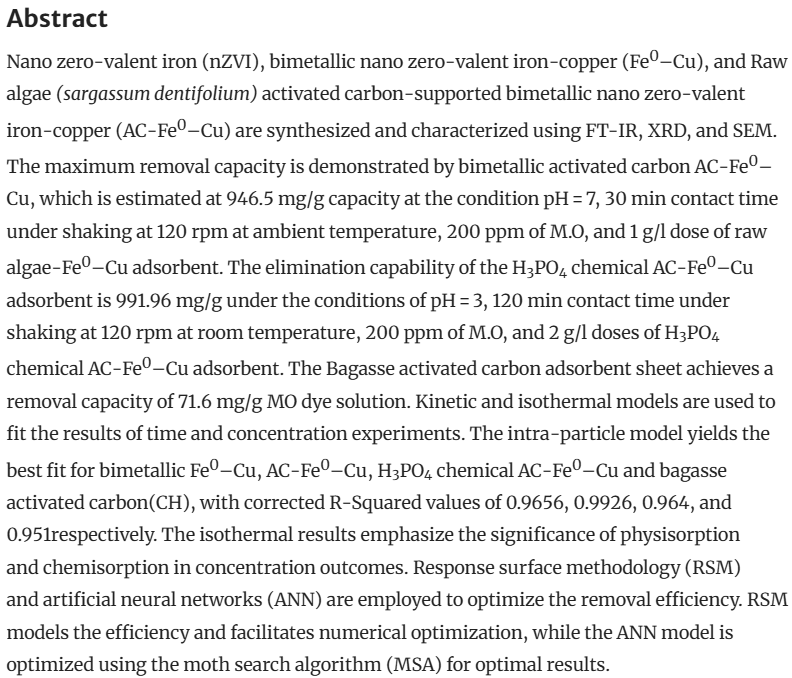
Abstract: Nano zero-valent iron (nZVI), bimetallic nano zero-valent iron-copper (Fe0–Cu), and Raw algae (sargassum dentifolium) activated carbon-supported bimetallic nano zero-valent iron-copper (AC-Fe0–Cu) are synthesized and characterized using FT-IR, XRD, and SEM. The maximum removal capacity is demonstrated by bimetallic activated carbon AC-Fe0–Cu, which is estimated at 946.5 mg/g capacity at the condition pH = 7, 30 min contact time under shaking at 120 rpm at ambient temperature, 200 ppm of M.O, and 1 g/l dose of raw algae-Fe0–Cu adsorbent. The elimination capability of the H3PO4
Crystal violet removal using bimetallic Fe0–Cu and its composites with fava bean activated carbon
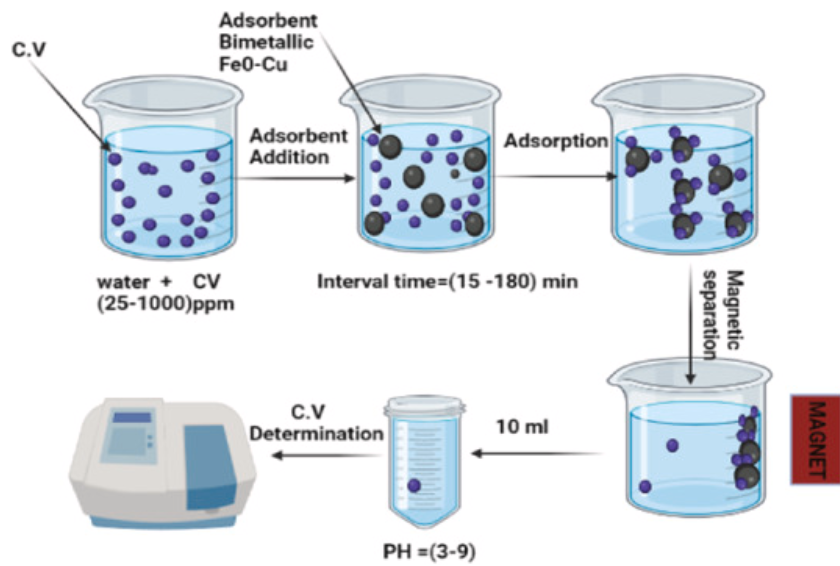
Nano zero-valent iron (nZVI), bimetallic nano zero-valent iron-copper (Fe0– Cu), and fava bean activated carbon-supported bimetallic nano zero-valent iron-copper (AC-Fe0-Cu) are synthesized and characterized using DLS, zeta potential, FT-IR, XRD, and SEM. The maximum removal capacity is demonstrated by bimetallic Fe0–Cu, which is estimated at 413.98 mg/g capacity at pH 7, 180 min of contact duration, 120 rpm shaking speed, ambient temperature, 100 ppm of C.V. dye solution, and 1 g/l dosage. The elimination capability of the H2SO4 chemical AC-Fe0-Cu adsorbent is 415.32 mg/g under the same