
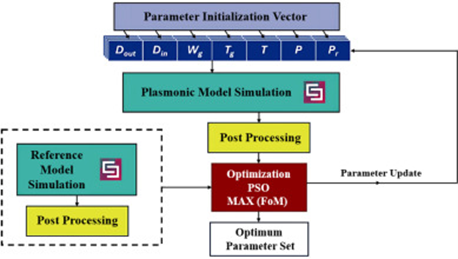
Analysis of plasmonic nanoparticles effects on the performance of perovskite solar cells through surface recombination and short-circuiting behaviors
Plasmonic photovoltaics integrate nanoparticles into the active layer to enhance power absorption. However a gap exists between simulated and experimental IV characteristics. Fabrication studies have attributed the issues to fabrication resolution, and recombination with no detailed step-by-step characterization. To address this issue, the paper presents a comprehensive optical and electrical study of a new plasmonic crescent nanoparticle (CNP). These particles serve as a near-field confinement source to enhance the efficiency of perovskite TiO2-MAPbI3-Spiro solar cells. The proposed design
CNTFET-based Approximate Ternary Adder Design
Multiple-Valued Logic (MVL) offers better data representation allowing higher information processing within the same amount of digits. With a trade-off in accuracy, approximate computation is a method to improve the power, size, and speed of digital circuits. This paper presents the design of CNTFET-based ternary half adder, full adder, 2-trit carry ripple adder, and 4trit carry ripple adder with different accuracies. The proposed designs are implemented using HSPICE tool and simulated for power consumption, delay, and error analysis. The trade-off between the transistor count and the
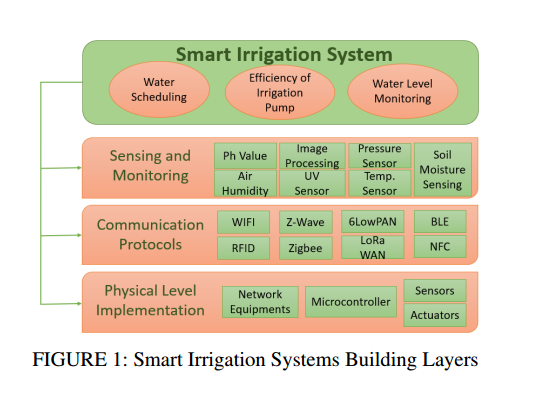
Smart Irrigation Systems: Overview
Countries are collaborating to make agriculture more efficient by combining new technologies to improve its procedure. Improving irrigation efficiency in agriculture is thus critical for the survival of sustainable agricultural production. Smart irrigation methods can enhance irrigation efficiency, specially with the introduction of wireless communication systems, monitoring devices, and enhanced control techniques for efficient irrigation scheduling. The study compared on a wide range of study subjects to investigate scientific approaches for smart irrigation. As a result, this project
On Fractional-order Capacitive Wireless Power Transfer System
Wireless power transfer is becoming an increasingly viable solution for the electrical powering of various electronic gadgets. However, precise outputs are not guaranteed with integer systems, so fractional-order capacitors are vital. This paper studies a four-plate fractional capacitive power transfer system by varying six orders of capacitors between the plates along with the load resistance. A mathematical model based on a 4× 4 mutual fractional capacitance matrix is established for equidistantly placed four identical metal plates. Moreover, the chosen circuit topology is identified and

Ternary SRAM circuit designs with CNTFETs
Static random-access memory (SRAM) is a cornerstone in modern microprocessors architecture, as it has high power consumption, large area, and high complexity. Also, the stability of the data in the SRAM against the noise and the performance under the radian exposure are main concern issues. To overcome these limitations in the quest for higher information density by memory element, the ternary logic system has been investigated, showing promising potential compared with the conventional binary base. Moreover, carbon nanotube field effect transistor (CNTFET) is a new alternative device with
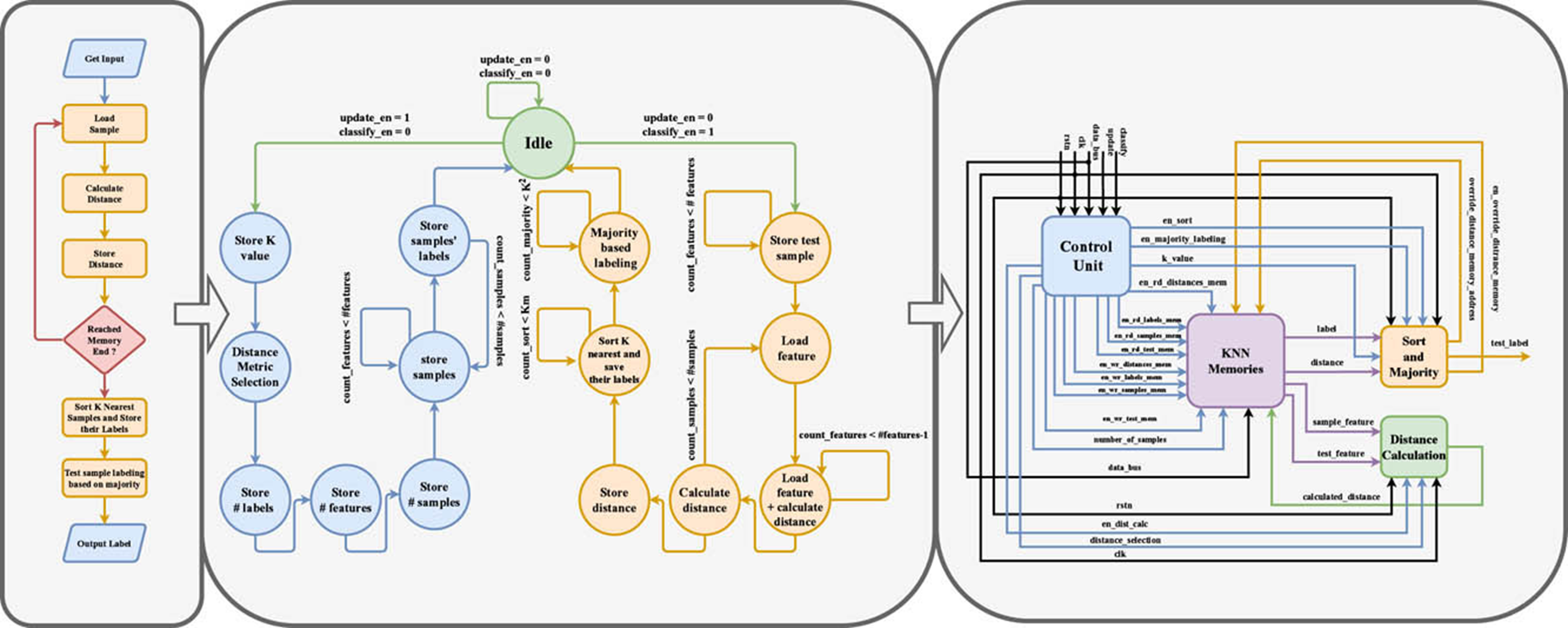
Generic Hardware Realization of K Nearest Neighbors on FPGA
K Nearest Neighbors (KNN) algorithm is a straight-forward yet powerful Machine Learning (ML) tool widely used in classification, clustering, and regression applications. In this work, KNN is applied, with three distance metrics, to classify different datasets, experimentally testing each distance metric effect on the classification performance. A static K is applied for the whole dataset optimally chosen based on a 5-fold cross-validation. A reconfigurable hardware realization on field programmable gate array (FPGA) of each distance metric applying selection sort algorithm is proposed. The
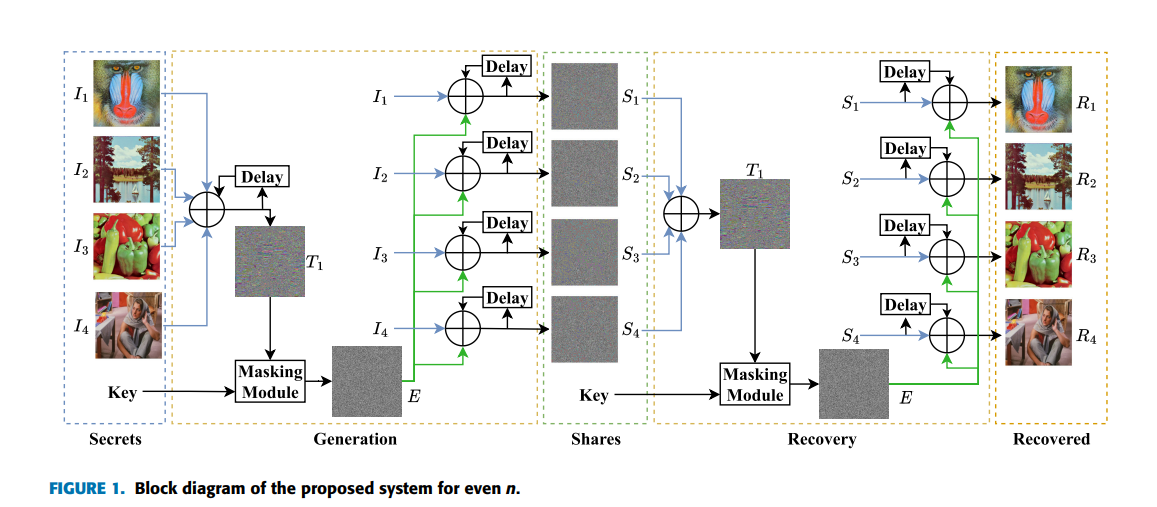
An Efficient Multi-Secret Image Sharing System Based on Chinese Remainder Theorem and Its FPGA Realization
Multi-Secret Image Sharing (MSIS) is important in information security when multiple images are shared in an unintelligible form to different participants, where the images can only be recovered using the shares from participants. This paper proposes a simple and efficient ( n,n )-MSIS system for colored images based on XOR and Chinese Remainder Theorem (CRT), where all the n share are required in the recovery. The system improves the security by adding dependency on the input images to be robust against differential attacks, and by using several delay units. It works with even and odd number
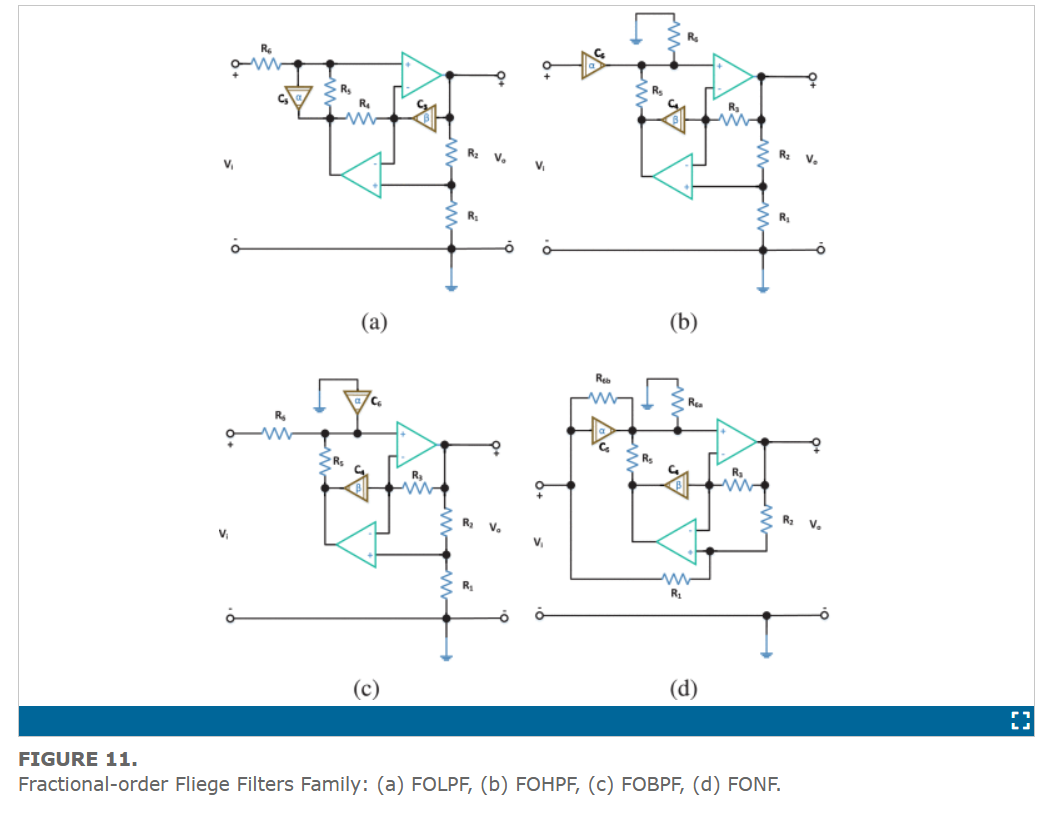
On the Design Flow of the Fractional-Order Analog Filters Between FPAA Implementation and Circuit Realization
This work explicitly states the design flows of the fractional-order analog filters used by researchers throughout the literature. Two main flows are studied: the FPAA implementation and the circuit realization. Partial-fraction expansion representation is used to prepare the approximated fractional-order response for implementation on FPAA. The generalization of the second-order active RC analog filters based on opamp from the integer-order domain to the fractional-order domain is presented. The generalization is studied from both mathematical and circuit realization points of view. It is
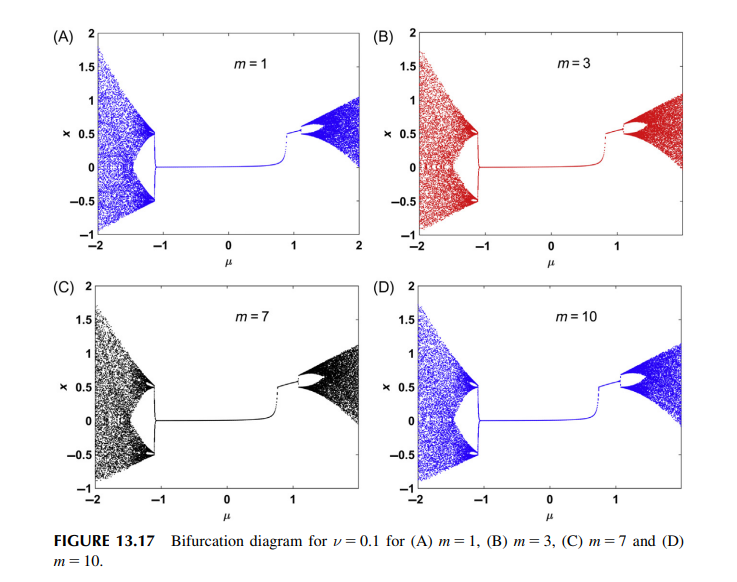
On the fractional order generalized discrete maps
Chaos theory describes the dynamical systems which exhibit unpredictable, yet deterministic, behavior. Chaotic systems have a remarkable importance in both modeling and information processing in many fields. Fractional calculus has also become a powerful tool in describing the dynamics of complex systems such as fractional order (FO) chaotic systems. The FO parameter adds extra degrees of freedom which increases the design flexibility and adds more control on the design. The extra parameters increase the chaotic range. This chapter provides a review of several generalized discrete time one
On the Approximation of Fractional-Order Circuit Design
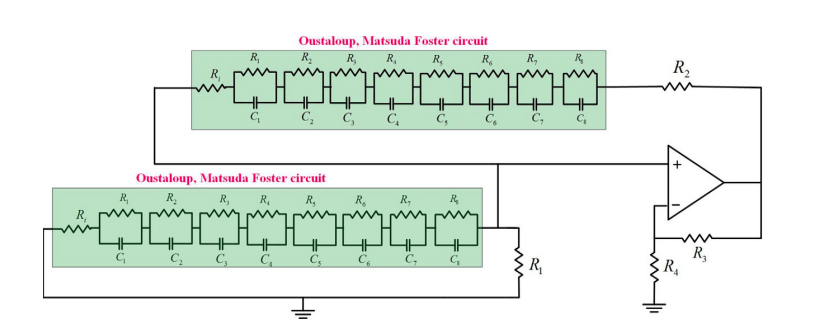
Despite the complex nature of fractional calculus, it is still fairly possible to reduce this complexity by using integer-order approximation. Each integer-order approximation has its own trade-offs from the complexity, sensitivity, and accuracy points of view. In this chapter, two different fractional-order electronic circuits are studied: the Wien oscillator and the CCII-based KHN filter with two different fractional elements of orders α and β. The investigation is concerned with changes in the response of these two circuits under two approximations: Oustaloup and Matsuda. A detailed review