
Filter by
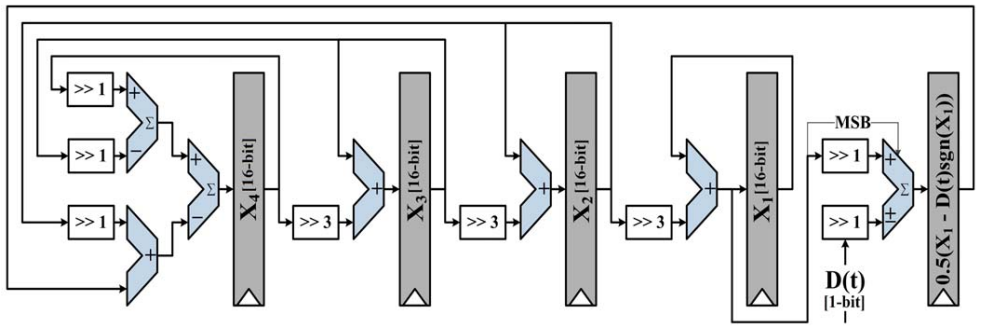
Fibonacci-based hardware post-processing for non-autonomous signum hyperchaotic system
This paper presents a hardware implementation of a robust non-autonomous hyperchaotic-based PRNG driven by a 256-bit LFSR. The original chaotic output is post-processed using a novel technique based on the Fibonacci series, bitwise XOR, rotation, and feedback. The proposed post-processing technique preserves the throughput of the system and enhances the randomness in the output which is verified
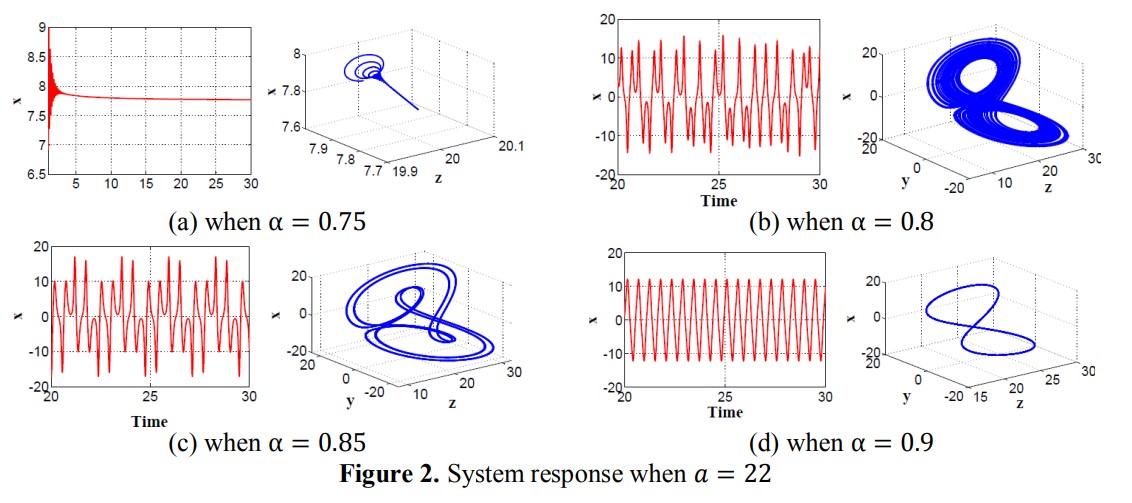
Parametric control on fractional-order response for Lü chaotic system
This paper discusses the influence of the fractional order parameter on conventional chaotic systems. These fractional-order parameters increase the system degree of freedom allowing it to enter new domains and thus it can be used as a control for such dynamical systems. This paper investigates the behaviour of the equally-fractional-order Lü chaotic system when changing the fractional-order
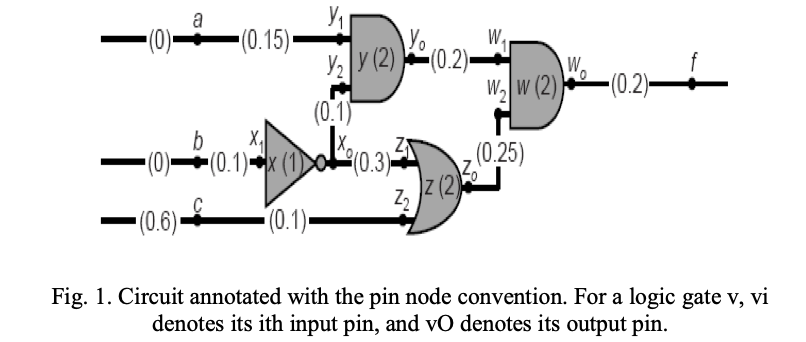
Accurate timing analysis of combinational logic cells engine using adaptive technique based on current source model
As the usage of very large scale integration (VLSI) in computers continues to increase, debugging of timing problems on actual hardware becomes more and more difficult. The post-layout gate-level simulation constitutes a critical design step for timing closure. The major drawback of traditional post-layout gate-level simulation is its long analysis time, which increases as design complexity

On some generalized discrete logistic maps
Recently, conventional logistic maps have been used in different vital applications like modeling and security. However, unfortunately the conventional logistic maps can tolerate only one changeable parameter. In this paper, three different generalized logistic maps are introduced with arbitrary powers which can be reduced to the conventional logistic map. The added parameter (arbitrary power)
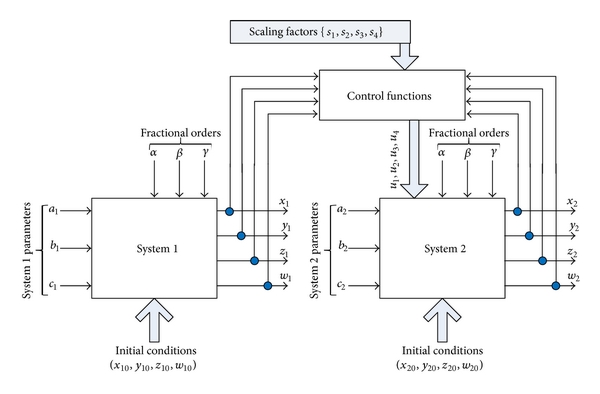
Amplitude modulation and synchronization of fractional-order memristor-based Chua's circuit
This paper presents a general synchronization technique and an amplitude modulation of chaotic generators. Conventional synchronization and antisynchronization are considered a very narrow subset from the proposed technique where the scale between the output response and the input response can be controlled via control functions and this scale may be either constant (positive, negative) or time

Fractional order butterworth filter: Active and passive realizations
This paper presents a general procedure to obtain Butterworth filter specifications in the fractional-order domain where an infinite number of relationships could be obtained due to the extra independent fractional-order parameters which increase the filter degrees-of-freedom. The necessary and sufficient condition for achieving fractional-order Butterworth filter with a specific cutoff frequency
On the mathematical modeling of series and parallel memcapacitors
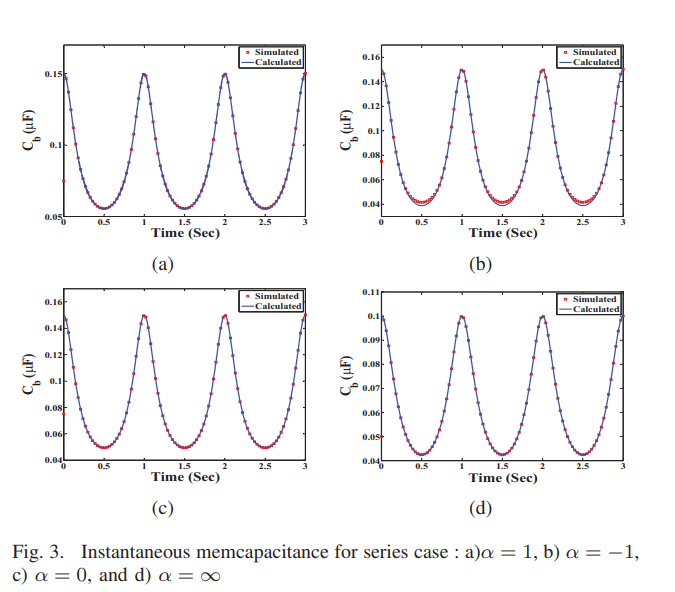
Recently, Memristive elements such as memristor, memcapacitor and meminductors have become very attractive components in many applications, due to its unique behavior which can not be obtained using the other conventional elements. This paper discusses the analytical analysis of two memcapacitors connected in series and in parallel taking the effect of mismatch in mobility factor and polarity of
A novel 10-Bit high-throughput two-stage TDC with reduced power and improved linearity
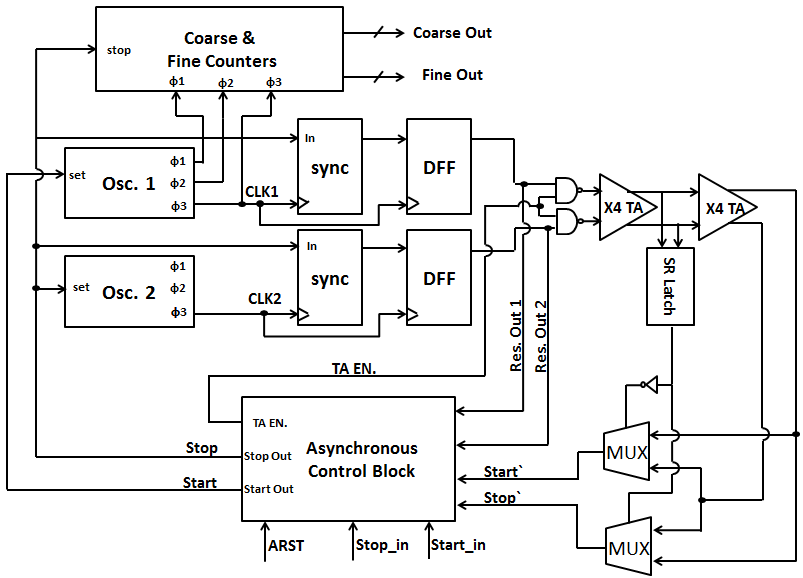
This paper introduces a new architecture that improves the throughput of the two-stage Time to Digital Converter (TDC). An oscillator-based TDC is used for conversion. The time residue from the first stage is generated directly after the stop signal is asserted and saved in the form of phase-shift between two oscillating signals. Instead of using two stages, an asynchronous control block is
A 2.5 μwatts two stage wake-up receiver for Wireless Sensor Networks
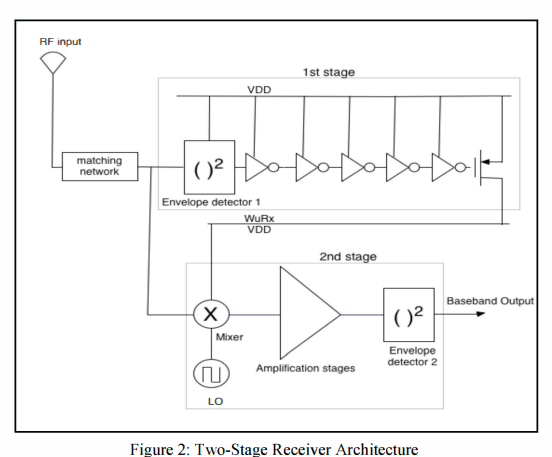
An ultra low power wake-up receiver for Wireless Sensor Network (WSN) applications is presented. The proposed wake-up receiver is composed of two stages. The first stage is a low-power low-sensitivity stage that acts as a 'sentinel' and continuously monitors the channel, while the second stage is a conventional low-power wake-up receiver. The 2.44GHz two-stage receiver has a sensitivity of -72dBm
Generalized hardware post-processing technique for chaos-based pseudorandom number generators
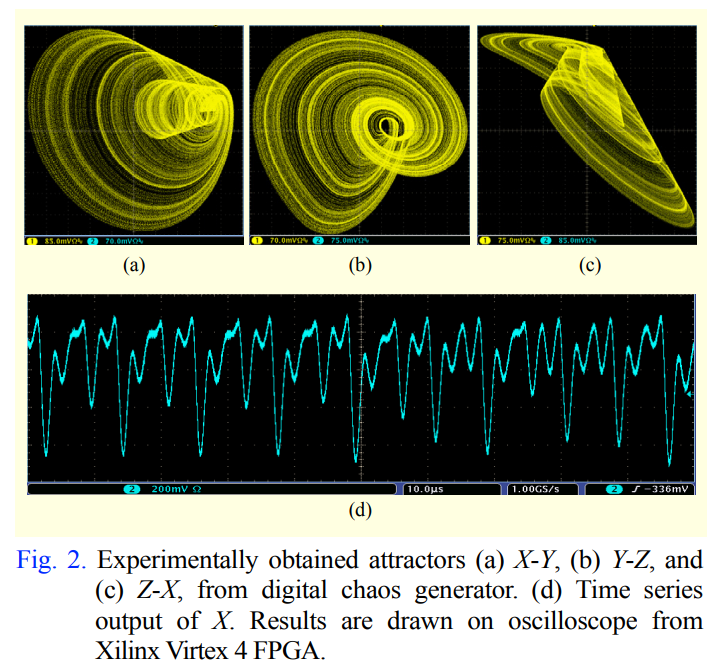
This paper presents a generalized post-processing technique for enhancing the pseudorandomness of digital chaotic oscillators through a nonlinear XOR-based operation with rotation and feedback. The technique allows full utilization of the chaotic output as pseudorandom number generators and improves throughput without a significant area penalty. Digital design of a third-order chaotic system with