
Filter by
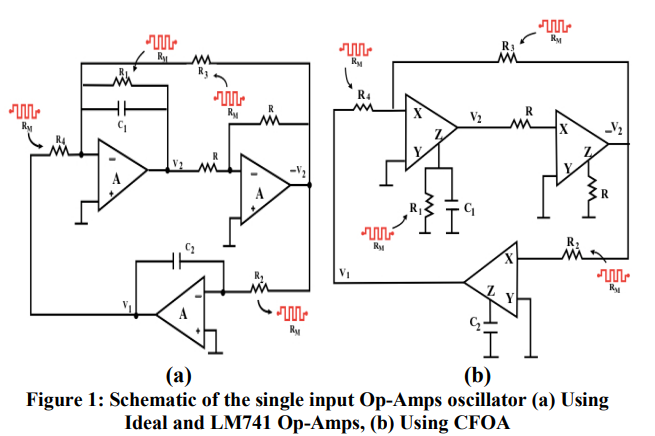
The modified single input Op-Amps memristor based oscillator
This paper introduces the modified single input Op-Amps memristor based oscillator. The oscillator is realized with ideal, LM741 and current feedback (AD844) Op-Amps where memristors replace resistors. The effect of memristor on the oscillation frequency and the oscillation condition that are totally independent is studied. This helped in studying the whole operation regime of the memristor. The
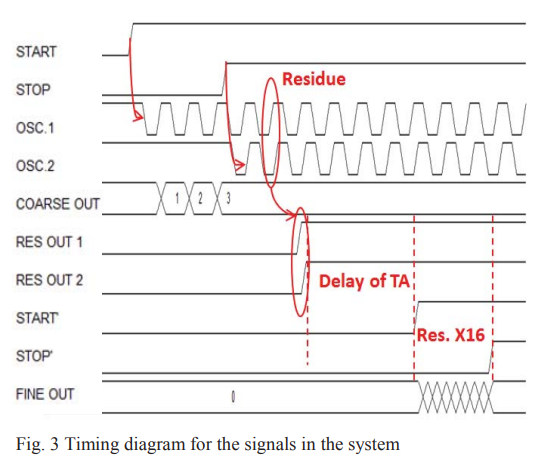
A novel high throughput high resolution two-stage oscillator-based TDC
This paper presents a new technique to reduce the conversion time, hence improve the throughput, of the two-stage Time to Digital Converter (TDC) architecture. An oscillator based TDC is used in the first and second stages. The time residue from the first stage is generated directly after the stop signal is asserted and saved in the form of phase-shift between two oscillating signals. A throughput
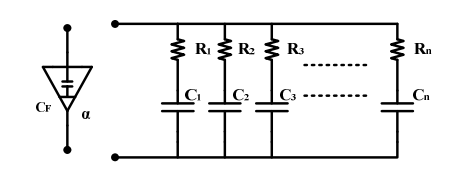
Current source based standard-cell model for accurate timing analysis of combinational logic cells
Timing verification is an essential process in nanometer design. Therefore, static timing analysis (STA) is currently the main aspect of performance verification. Traditional STA is based on lookup tables with input slew and output load capacitance. It is becoming insufficient to accurately characterize many significant aspects of the conventional cell delays models, such as: the process
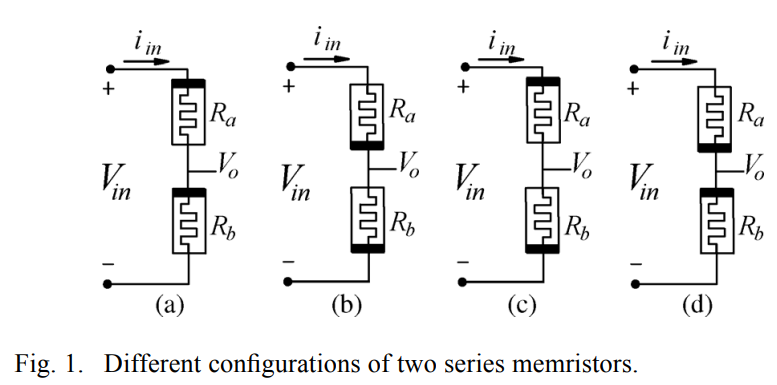
Generalized analysis of symmetric and asymmetric memristive two-gate relaxation oscillators
Memristive oscillators are a novel topic in nonlinear circuit theory, where the behavior of the reactive elements is emulated by the memristor. This paper presents symmetric and asymmetric memristive two-gate relaxation oscillators. First, the analysis of the two series memristors is introduced to study the effect of changing their polarities, as well as the mobility factor to be used in the two
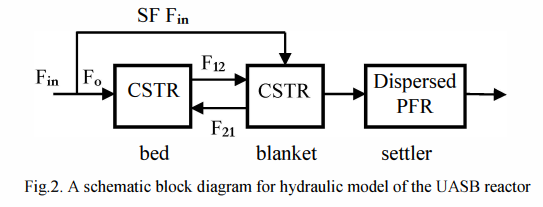
Mathematical modeling of Upflow Anaerobic Sludge Blanket reactor in domestic wastewater treatment
This paper introduces a dynamic model to adequately describe an Upflow Anaerobic Sludge Blanket (UASB) reactor. Some available models of a UASB reactor are discussed in order to modify their drawbacks and propose a new improved model with less complexity and more reliability. The developed model is a combination of two recent models introduced in Sweden. According to this model, a UASB rector is
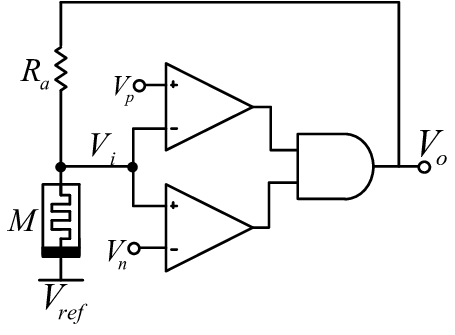
Effect of boundary on controlled memristor-based oscillator
Recently, the applications of memristors have spread into many fields and especially in the circuit theory. Many models have been proposed for the HP-memristor based on the window functions. In this paper, we introduce a complete mathematical analysis of the controlled reactance-less oscillator for two different window functions of Joglekar's model (linear and nonlinear dopant drift) to discuss
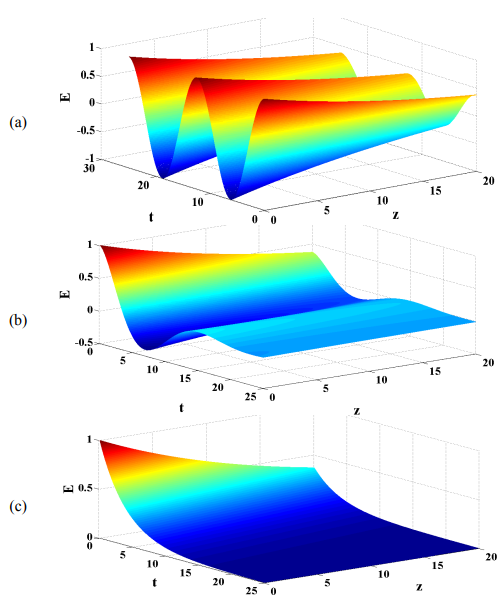
Rectangular waveguides in the fractional-order domain
This work introduces Maxwell's equations in their time domain fractional derivatives form. Some special cases of fractional order wave equations are shown. Studying the effect of fractional-order derivatives with respect to time on the generalized analysis and fundamentals of the rectangular waveguide is the main focus of this work. The effect of the fractional-order parameters on the waveguide
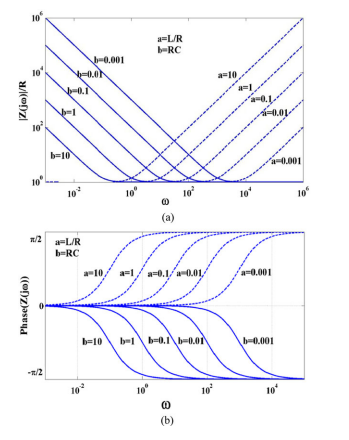
Fractional-order RC and RL circuits
This paper is a step forward to generalize the fundamentals of the conventional RC and RL circuits in fractional-order sense. The effect of fractional orders is the key factor for extra freedom, more flexibility, and novelty. The conditions for RC and RL circuits to act as pure imaginary impedances are derived, which are unrealizable in the conventional case. In addition, the sensitivity analyses
Novel radio frequency energy harvesting model
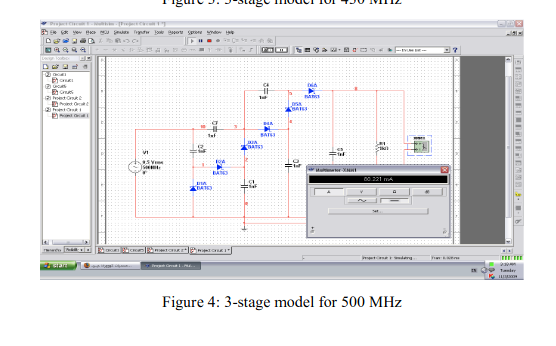
Energy and Environment, both are the main concern for every researcher allover the world. Alternative energy sources that are environmental friendly became the challenge to satisfy world needs. Oil and Gas are no more the main source of Energy, consequently the demand of an everlasting cheap source of energy that is environmental friendly, is the main goal recently. During the last decade, power
A 5-10GHz low power bang-bang all digital PLL based on programmable digital loop filter
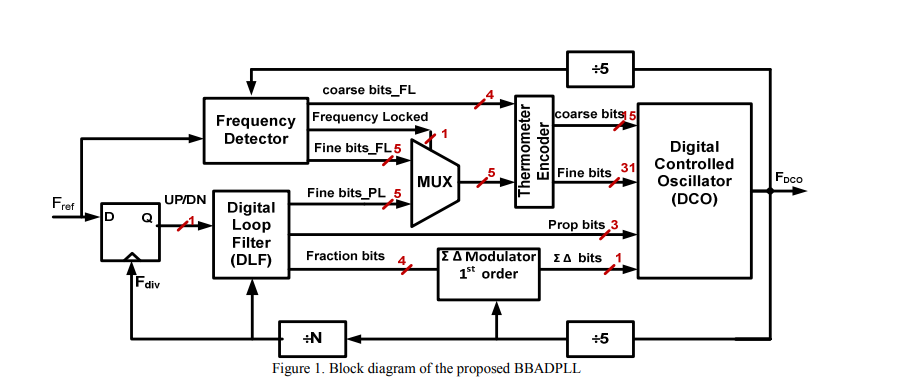
This paper presents the design and the implementation of a low power bang-bang all digital phase locked loop (BBADPLL). The design of the proposed architecture is based on the programmable coefficients of the digital loop filter (DLF) that manages the tradeoffs between stability and jitter of a closed loop. A proposed simple digital controlled oscillator (DCO) based on three stages ring oscillator