
Enhancement of plasmonic photovoltaics with pyramidal nanoparticles
Light trapping as a result of embedding plasmonic nanoparticles (NPs) into photovoltaics (PVs) has been recently used to achieve better optical performance compared to conventional PVs. This light trapping technique enhances the efficiency of PVs by confining incident light into hot-spot field regions around NPs, which have higher absorption, and thus more enhancement of the photocurrent. This research aims to study the impact of embedding metallic pyramidal-shaped NPs inside the PV’s active region to enhance the efficiency of plasmonic silicon PVs. The optical properties of pyramidal-shaped
Novel Fast Prediction Algorithm for Advanced and High Efficiency Video Coding
This paper introduces an efficient prediction algorithm tailored for advanced and high efficiency video coding, encompassing both H.264 and H.265. The proposed approach aims at replacing the standard intra prediction methodology by employing a streamlined prediction mode, which significantly reduces computational overhead and system complexity while eliminating the requirement for mode decision. By leveraging block comparison criteria, the designed method combines neighboring blocks in a linear fashion to accurately represent the target block. Extensive comparisons are conducted with the H.264
Small Area and Low Power Hybrid CMOS-Memristor Based FIFO for NoC
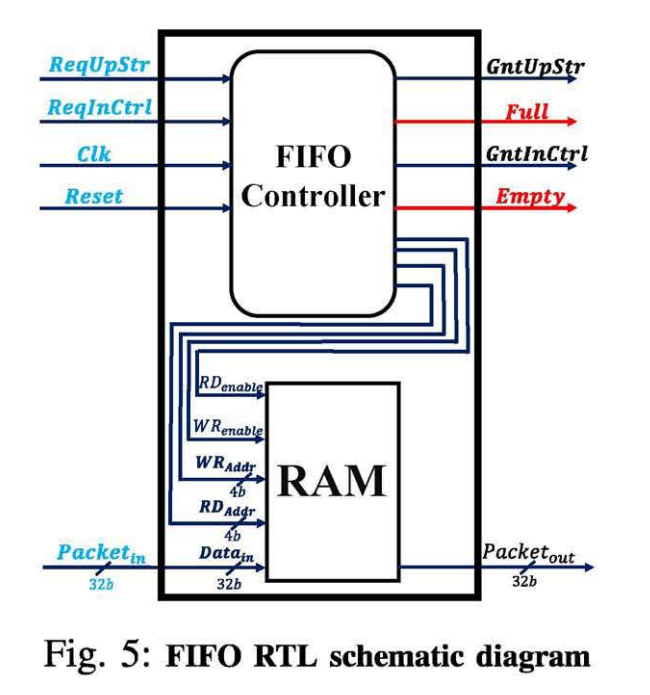
Area and power consumption are the main challenges in Network on Chip (NoC). Indeed, First Input First Output (FIFO) memory is the key element in NoC. Increasing the FIFO depth, produces an increas in the performance of NoC but at the cost of area and power consumption. This paper proposes a new hybrid CMOS-Memristor based FIFO architecture that consumes low power and has a small size compared to the conventional CMOS-based FIFOs. The predicted area is approximately equal to the half of that wasted in conventional FIFOs. The implementation of FIFO controller module is implemented using HDL
Modeling of dark current in semispherical quantum dot structures for infrared photodetection
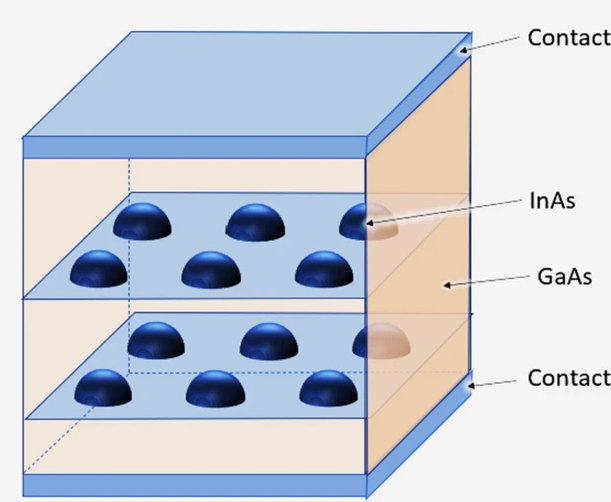
Due to its tunable heterojunction bandgap and great sensitivity to normal incident illumination, the Quantum Dot Infrared Photodetectors (QDIPs) have received a lot of attention for the purpose of infrared sensing. It could be a very promising replacement for conventional infrared photodetectors made with established technology, including mercury cadmium telluride and quantum well infrared photodetectors. In this work, a model for the dark current in semispherical QDIP has been developed, resolves the primary semiconductor Poisson's and continuity equations, where the wave function and the
Interdigitated C-Patch Metamaterial Antenna for Terahertz Sensing
This paper proposes a metamaterial Terahertz sensor with detected sensitivity for biomedical applications. The proposed sensor consists of two interdigitated golden C-shaped structures on top of Teflon substrate that is backed by a gold layer. The absorption spectrum contains a peak resonance corresponding to the maximum absorption of the sensor. The proposed sensor has a maximum narrow-band absorption at 3.35 THz, with an average sensitivity of 2.256 THz/RIU and a quality factor of 22.3. The developed model is checked for the range of refractive index range between n= 1.3 to n= 1.4 to check
A (k,n)-Secret Image Sharing With Steganography Using Generalized Tent Map
Secret Image Sharing (SIS) transfers an image to mutually suspicious receivers as n meaningless shares, where k or more shares must be present to recover the secret. This paper proposes a (k, n)-SIS system for any image type using polynomial interpolation based on Lagrange polynomials, where the generated shares are of size 1/k of the secret image size. A full encryption system, consisting of substitution and permutation stages, is employed by using the generalized Tent map as a source of randomness. In addition to using a long and sensitive system key, steganography using the Least
Fractional-Order Equivalent-Circuit Model Identification of Commercial Lithium-Ion Batteries
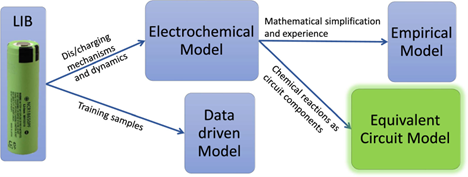
The precise identification of electrical model parameters of Li-Ion batteries is essential for efficient usage and better prediction of the battery performance. In this work, the model identification performance of two metaheuristic optimization algorithms is compared. The algorithms in comparison are the Marine Predator Algorithm (MPA) and the Partial Reinforcement Optimizer (PRO) to find the optimal model parameter values. Three fractional-order (FO) electrical equivalent circuit models (ECMs) of Li-Ion batteries with different levels of complexity are used to fit the electrochemical
Secure blind watermarking using Fractional-Order Lorenz system in the frequency domain
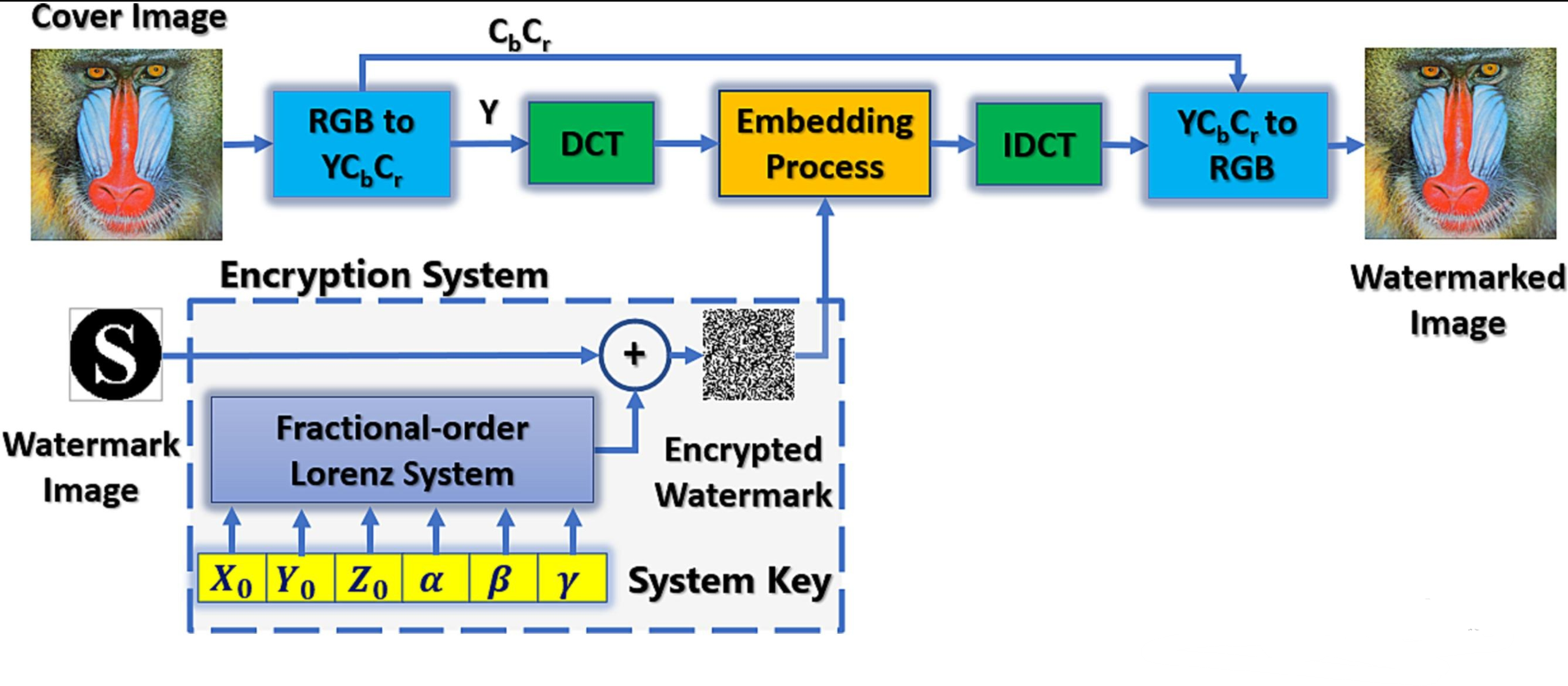
This paper investigates two different blind watermarking systems in the frequency domain with the development of a Pseudo Random Number Generator (PRNG), based on a fractional-order chaotic system, for watermark encryption. The methodology is based on converting the cover image to the YCbCr color domain and applying two different techniques of frequency transforms, Discrete Cosine Transform (DCT) and Discrete Wavelet Transform (DWT), to the Y channel. Then, the encrypted watermark is embedded in the middle-frequency band and HH band coefficients for the DCT and DWT, respectively. For more
Nonlinear fractional order boundary-value problems with multiple solutions
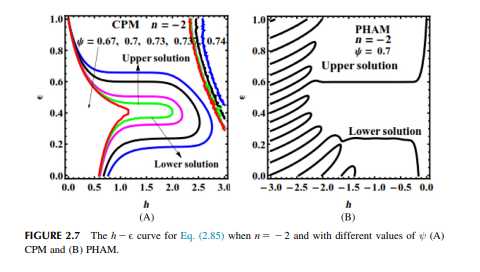
It is well-known that discovering and then calculating all branches of solutions of fractional order nonlinear differential equations with boundary conditions can be difficult even by numerical methods. To overcome this difficulty, in this chapter two semianalytic methods are presented to predict and obtain multiple solutions of nonlinear boundary value problems. These methods are based on the homotopy analysis method (HAM) and Picard method namely, predictor HAM and controlled Picard method. The used techniques are capable of predicting and calculating all branches of the solutions
Wastewater Treatment: Recycling, Management, and Valorization of Industrial Solid Wastes
Wastewater Treatment: Recycling, Management, and Valorization of Industrial Solid Wastes bridges the gap between the theory and applications of wastewater treatments, principles of diffusion, and the mechanism of biological and industrial treatment processes. It presents the practical applications that illustrate the treatment of several types of data, providing an overview of the characterization and treatment of wastewaters, and then examining the different biomaterials and methods for the evaluation of the treatment of biological wastewaters. Further, it considers the various types of