
Different Approximation Techniques For A FOPID Feedback Control of a DC Motor
DC motors are commonly employed in many industrial applications due to their various advantages. This study aims to compare the response of the Oustaloup-Recursive-Approximation (ORA) and El-Khazali's approximation method in controlling a DC motor with a FOPID controller. The two employed methods are used to design the FOPID and approximate. For various fractional orders, many behaviours are presented. A simulation comparison between these methods is performed regarding overshoot, settling time and rise time. © 2022 IEEE.
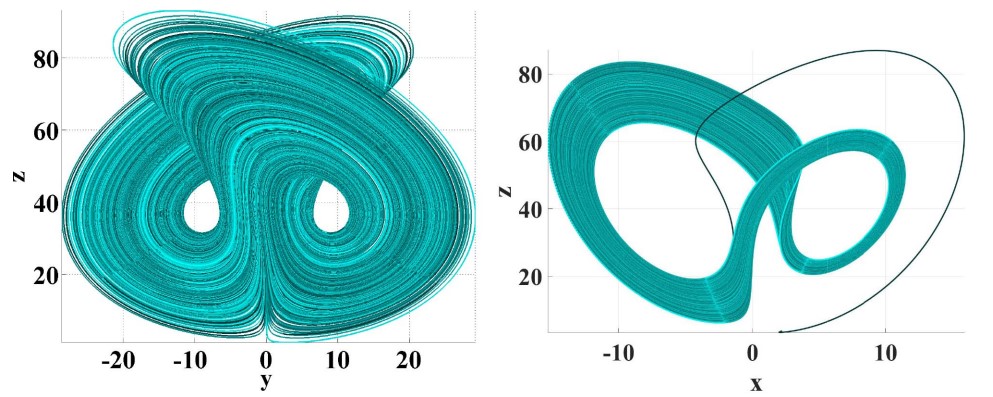
Chaotic Dynamics and FPGA Implementation of a Fractional-Order Chaotic System with Time Delay
This article proposes a numerical solution approach and Field Programmable Gate Array implementation of a delayed fractional-order system. The proposed method is amenable to a sufficiently efficient hardware realization. The system's numerical solution and hardware realization have two requirements. First, the delay terms are implemented by employing LookUp Tables to keep the already required delayed samples in the dynamical equations. Second, the fractional derivative is numerically approximated using Grünwald-Letnikov approximation with a memory window size, L, according to the short memory
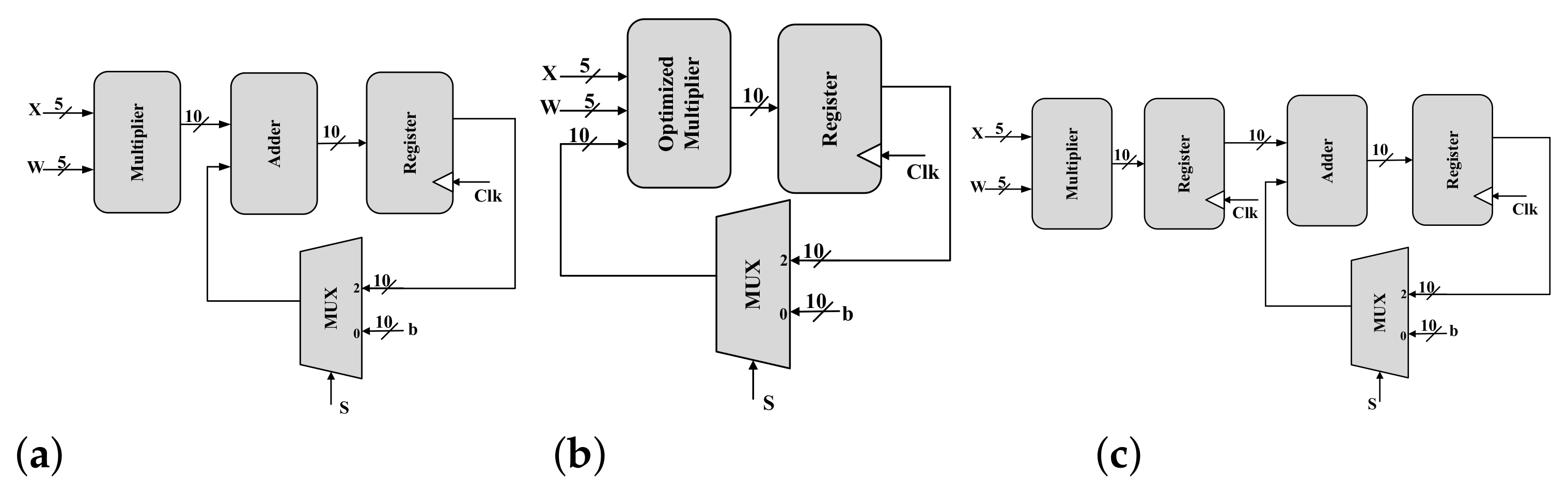
CNTFET-Based Ternary Multiply-and-Accumulate Unit
Multiply-Accumulate (MAC) is one of the most commonly used operations in modern computing systems due to its use in matrix multiplication, signal processing, and in new applications such as machine learning and deep neural networks. Ternary number system offers higher information processing within the same number of digits when compared to binary systems. In this paper, a MAC is proposed using a CNTFET-based ternary logic number. Specifically, we build a 5-trit multiplier and 10-trit adder as building blocks of two ternary MAC unit designs. The first is a basic MAC which has two methods to

A Study on Fractional Power-Law Applications and Approximations
The frequency response of the fractional-order power-law filter can be approximated by different techniques, which eventually affect the expected performance. Fractional-order control systems introduce many benefits for applications like compensators to achieve robust frequency and additional degrees of freedom in the tuning process. This paper is a comparative study of five of these approximation techniques. The comparison focuses on their magnitude error, phase error, and implementation complexity. The techniques under study are the Carlson, continued fraction expansion (CFE), Padé, Charef
FPGA REALIZATION OF COMPLEX LOGISTIC MAP FRACTAL BEHAVIOR
This paper studies the capability of digital architecture to mimic fractal behavior. As chaotic attractors realized digitally had opened many tracks, digital designs mimicking fractals may ultimately achieve the same. This study is based on a complex single-dimensional discrete chaotic system known as the generalized positive logistic map. The fractals realized from this system are linked to the results of the mathematical analysis to understand the fractal behavior with different variations. A digital hardware architecture manifesting the fractal behavior is achieved on FPGA, showing a

Artificial Neural Network Chaotic PRNG and simple encryption on FPGA
Artificial Neural Networks (ANNs) are remarkably able to fit complex functions, making them useful in various applications and systems. This paper uses ANN to fit the Pehlivan–Uyaroglu Chaotic System (PUCS) to produce an Artificial Neural Network Chaotic Pseudo-Random Number Generator (ANNC-PRNG). The proposed PRNG imitates the PUCS chaotic system's properties and attractor shape. The proposed ANNC-PRNG is implemented in a simple image encryption system on the Xilinx Kintex-7 Genesys 2 Field Programmable Gate Array (FPGA) board. Hardware realization of an ANN trained on chaotic time series has
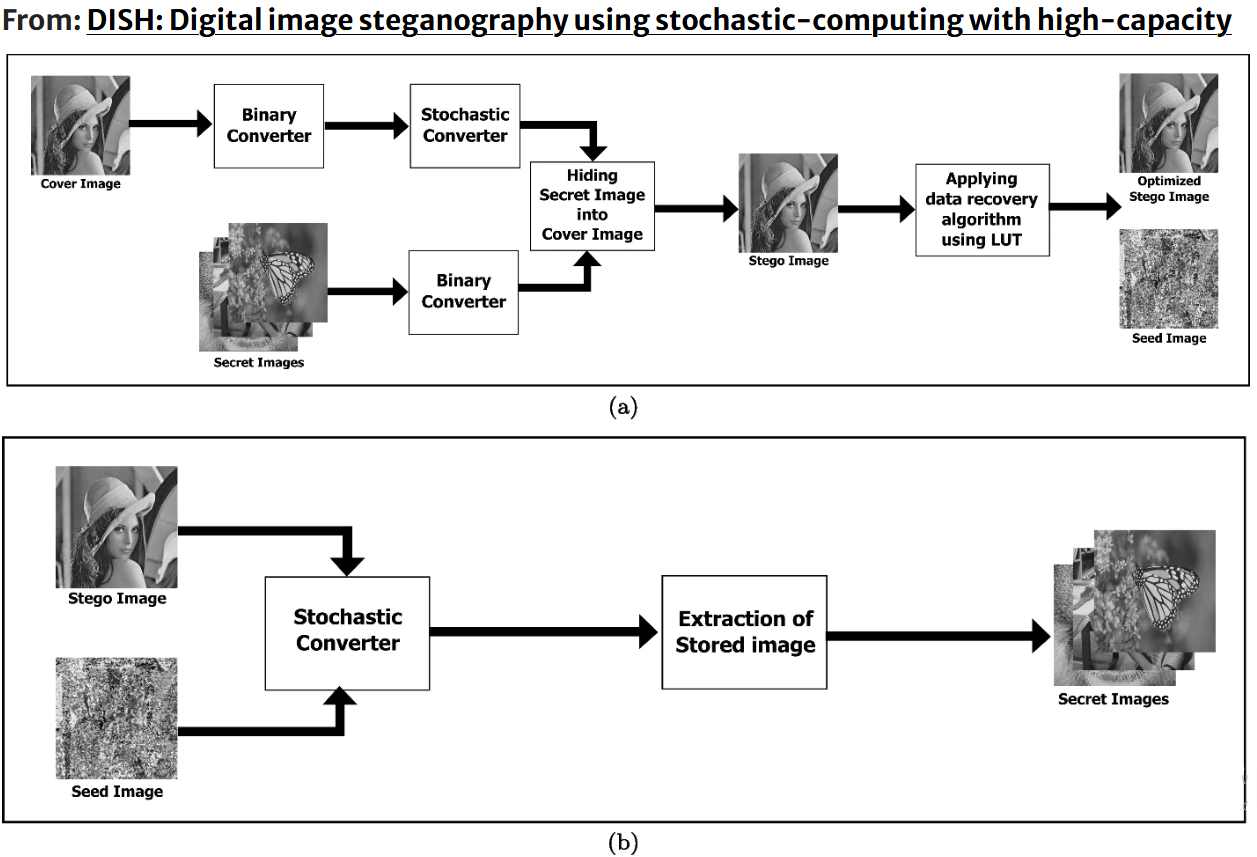
DISH: Digital image steganography using stochastic-computing with high-capacity
Stochastic computing is a relatively new approach to computing that has gained interest in recent years due to its potential for low-power and high-noise environments. It is a method of computing that uses probability to represent and manipulate data, therefore it has applications in areas such as signal processing, machine learning, and cryptography. Stochastic steganography involves hiding a message within a cover image using a statistical model. Unlike traditional steganography techniques that use deterministic algorithms to embed the message, stochastic steganography uses a probabilistic
Enhancing the Performance of Thin Film Photovoltaic Solar Cells using Truncated Conical Nanoparticles
Plasmonic photovoltaics are considered as promising photovoltaic candidate with enhanced optical absorption and quantum efficiency by embedding metallic nanoparticles in the photovoltaic active layer. In this paper, the efficiency enhancement of ultra-thin film solar cells with embedded truncated cone nanoparticles is studied. First, the natural electric field modes of the truncated cone in free-space are examined when excited by a plane wave. Parametric study is then performed to investigate the effects of the geometrical parameters of the structure on its resonant modes. Second, a uniform
Bowtie-Shaped Plasmonic Nanoparticles-Enhanced Photovoltaic Anti-Reflective Coating
Light trapping is a promising technique that enhances sunlight absorption by solar cells. This paper presents a study of bow-tie-shaped nanoparticles embedded in the antireflection coating of photovoltaic solar cells, which enhances the optical transmission of the photovoltaic surface. Therefore, the optical path length for light penetration is increased through the semiconductor active layer. First, the fundamental electric field modes of a single nanoscaled bow-tie are examined under excitation of plane waves with different polarizations. Second, an array of bow-tie-shaped nanoparticles is
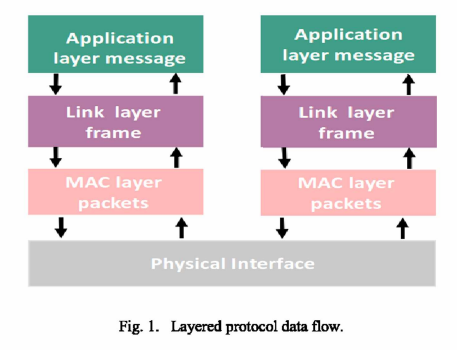
An Automated Lightweight UVM Tool
In this paper, an automated universal verification methodology (UVM) tool for rapid functional verification is presented. Now, UVM dominates the verification process but, it is very hard and too complicated to learn. This paper introduces a lightweight UVM tool which allows the user to rapidly verify complex RTL designs and different IPs. Also, it allows the user to perform the simulation for any design under test (DUT). The proposed tool generates the suitable UVM architecture to the DUT with the needed codes. Moreover, it provides the user with statistics about the number of the used classes