
Adsorption as an Emerging Technology and Its New Advances of Eco-Friendly Characteristics: Isotherm, Kinetic, and Thermodynamic Analysis
Water contamination with paints causes a colour agent to the water that negatively affects the environment, organisms, and humans. Different physicochemical processes are applied for wastewater treatment; however, they have many drawbacks such as high cost, generating toxic waste, and non-effective at low concentrations. Adsorption is considered a promising technique for pollutant removal from polluted wastewater. Commercial activated carbon, nano-materials, and natural biological materials are used as adsorbents in adsorption. This chapter focuses on discussing the adsorption process, the
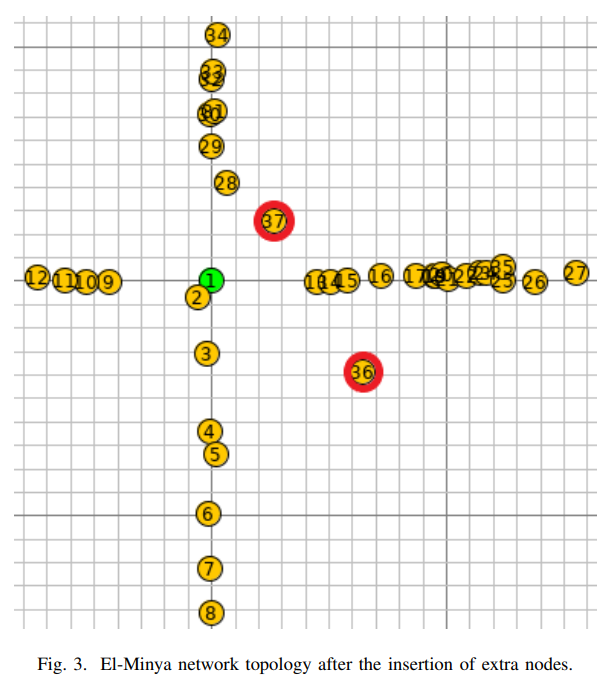
Realistic Wireless Smart-Meter Network Optimization Using Composite RPL Metric
In smart metering applications, transferring and collecting data within delay constraints is crucial. IoT devices are usually resource-constrained and need reliable and energy-efficient routing protocol. Furthermore, meters deployed in lossy networks often lead to packet loss and congestion. In smart grid communication, low latency and low energy consumption are usually the main system targets. Considering these constraints, we propose an enhancement in RPL to ensure link reliability as well as low latency. We refer to the proposed new additive composite metric as Delay-Aware RPL (DA-RPL)
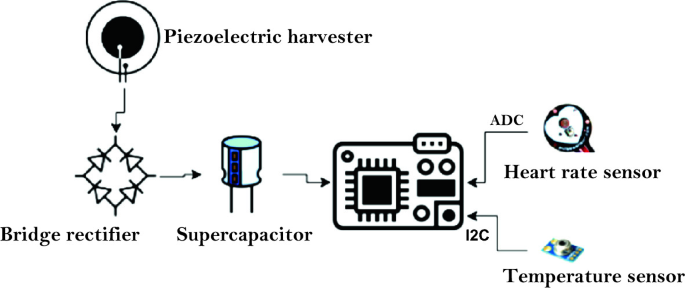
Energy Aware Tikhonov-Regularized FPA Technique for Task Scheduling in Wearable Biomedical Devices
Harvesting the energy from environmental sources is a promising solution for perpetual and continuous operation of biomedical wearable devices. Although the energy harvesting technology ensures the availability of energy source, yet power management is crucial to ensure prolonged and stable operation under a stringent power budget. Thus, power-aware task scheduling can play a key role in minimizing energy consumption to improve system durability while maintaining device functionality. This chapter proposes a novel biosensor task scheduling of energy harvesting-based biomedical wearable devices
Semi-Fragile Watermark for the Authentication and Recovery of Tampered Images
In order to strengthen the safety of corporate multimedia assets, a semi-fragile watermarking method is developed, which makes use of the integer wavelet transform (IWT) and the discrete cosine transform (DCT) for tamper detection and recovery. In this paper, we produce two distinct kinds of watermarks: an authentication watermark and a recovery watermark. A tamper detection methodology is utilized at the receiving end to check the watermarked image for validity and detect any assaults. If the changes are determined to be malicious, the suggested tamper recovery method is used to restore the

Optogenetic Multiphysical Fields Coupling Model for Implantable Neuroprosthetic Probes
Optogenetic-based neuroprosthetic therapies are increasingly being considered for human trials. However, the optoelectronic design of clinical-grade optogenetic-based neuroprosthetic probes still requires some thought. Design constraints include light penetration into the brain, stimulation efficacy, and probe/tissue heating. Optimisation can be achieved through experimental iteration. However, this is costly, time-consuming and ethically problematic. Hence it is highly desirable to have an alternative to excessive animal trials. Thus, a simulation tool for optimising probe design can be an
Integration of Federated Machine Learning in Smart Metering Systems
The applications of Federated Learning are many, and they can be used to predict electricity consumption and, at the same time, enable smart meters to collaboratively learn a shared model while keeping all their data locally in their own private database. With this approach, the central model will see more data and will work better to predict electricity consumption more accurately than the models trained on only one local Dataset. The planning of infrastructure, grid operation, and budgeting all depend on accurate load forecasting. As a result, this paper suggests federated learning for load

SSHC with One Capacitor for Piezoelectric Energy Harvesting
Piezoelectric vibration energy harvesters have attracted a lot of attention as a way to power self-sustaining electronic systems. Furthermore, as part of the growing Internet of Things (loT) paradigm, the ongoing push for downsizing and higher degrees of integration continues to constitute major drivers for autonomous sensor systems. Two of the most effective interface circuits for piezoelectric energy harvesters are synchronised switch harvesting (SSH) on inductor and synchronous electrical charge extraction; nevertheless, inductors are essential components in both interfaces. This study
Wireless Optogenetics Visual Cortical Prosthesis Control System
This research paper presents the wireless data and power transfer system for optogenetics visual cortical prosthesis. The system uses the inductive coupling power transfer and 2.4GHz Bluetooth 4.0 data transfer. This system contains two hardware parts: the external headset consists of power and data transmitters, image capture, and image processing units; the subcutaneous implant PCB consists of power and data receiver and the control unit. We also present the relative image processing method for this system. The whole system could power and control the optogenetic neural stimulus of the
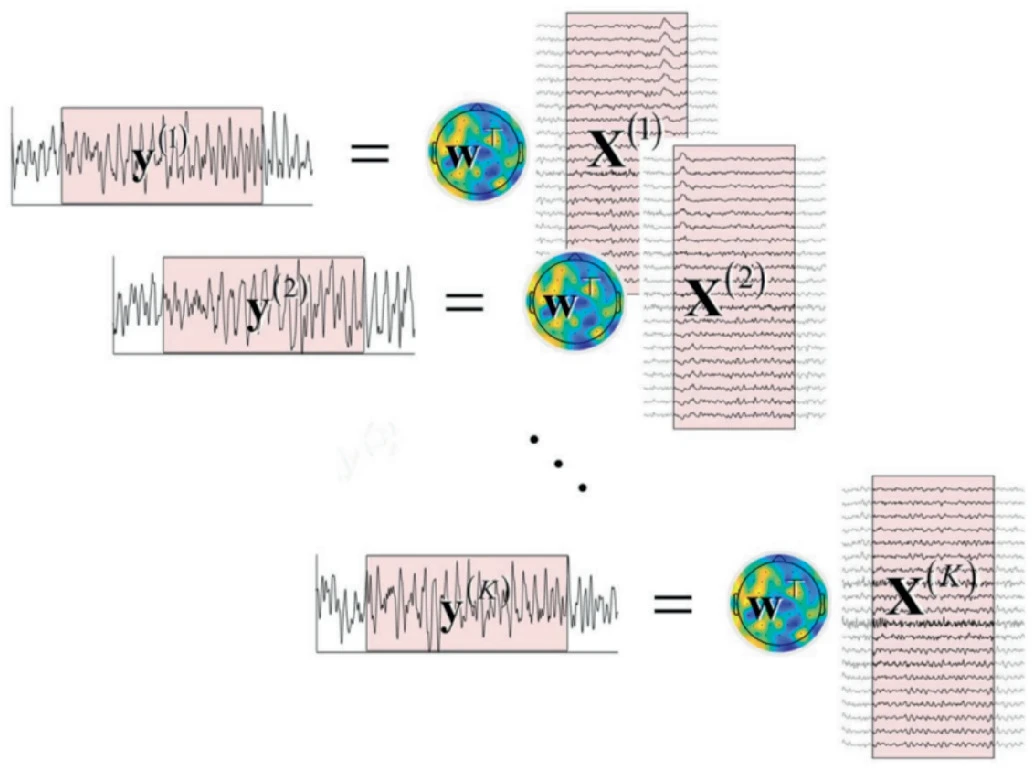
A Comparative Analysis of Time Series Transformers and Alternative Deep Learning Models for SSVEP Classification
Steady State Visually Evoked Potentials (SSVEPs) are intrinsic responses to specific visual stimulus frequencies. When the retina is activated by a frequency ranging from 3.5 to 75 Hz, the brain produces electrical activity at the same frequency as the visual signal, or its multiples. Identifying the preferred frequencies of neurocortical dynamic processes is a benefit of SSVEPs. However, the time consumed during calibration sessions limits the number of training trials and gives rise to visual fatigue since there is significant human variation across and within individuals over time, which
An Optimized Non-Invasive Blood Glucose and Temperature Body Measurement System
Diabetes is a disease in which the body does not adequately process food for energy production. Most of the food we consume is converted into glucose, or sugar, which our bodies use for energy. Moreover, the pancreas, which is an organ located near the stomach, produces insulin, a hormone that aids in the transport of glucose into our bodies' cells. Diabetes occurs when your body either does not produce enough insulin or does not use its own insulin the way it is supposed to. Sugars accumulate in your blood as a result of this. This is why diabetes is often referred to as "sugar". People with