
Filter by

Multiple Pinch-Off Points in Memristive Equations: Analysis and Experiments
Pinched hysteresis behavior is considered evidence of the existence of the memristive element. Recently, the multi-lobes (more than two) behavior has been discovered in some memristive devices. In this paper, a fractional-order flux/voltage-controlled memristive model is introduced that is able to develop multiple symmetric and asymmetric pinch-off points. Generalized closed-form expressions for

Cad tool for two-digit ternary functions design
Ternary number, which attracts the research attention for its high capacity, has emerged in many applications, recently. Unlike binary numbers, two bit ternary number involves 93 = 729 different functions while two bit binary number involves only 42 = 16 different possible functions. In this paper, a novel automatic software description two bits ternary functions design tool is presented
Reconfigurable chaotic pseudo random number generator based on FPGA
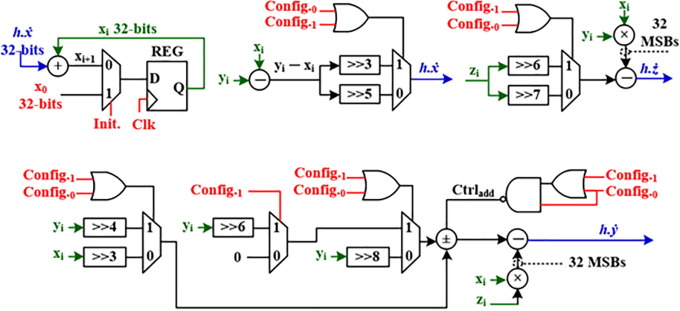
This paper presents an FPGA Pseudo Random Number Generator (PRNG) that is based on the Lorenz and Lü chaotic systems. These two systems are used to generate four different 3D chaotic attractors. One attractor is generated from Lorenz while the other three attractors are generated from Lü. The output attractor of the proposed PRNG can be reconfigured during real time operation using an efficient

Modulating the energy storage of supercapacitors by mixing close-to-ideal and far-from-ideal capacitive carbon nanofibers
The quest for high performance supercapacitors from the energy-power point of view is commonly addressed from the constituting electrode materials and/or the electrolyte. Carbon-based double-layer capacitors are known for their high power density, whereas pseudocapacitors which use transition metal oxides/nitrides/sulfides or conductive polymers are known for their high energy density. In this
The minimax approach for a class of variable order fractional differential equation
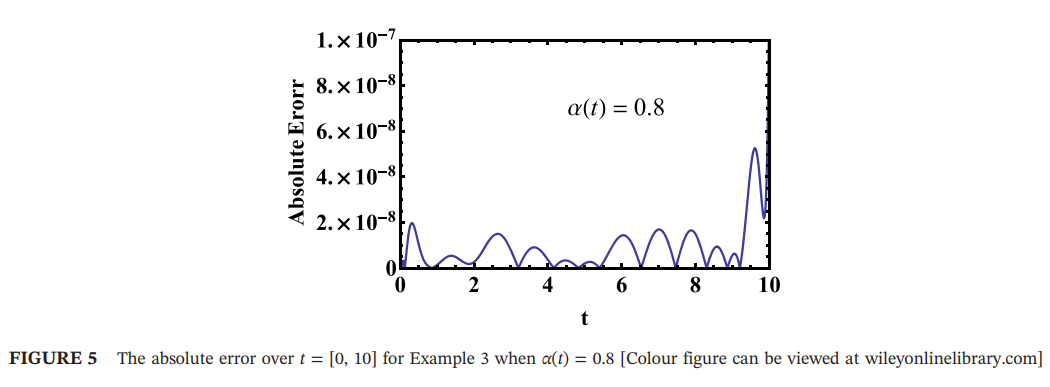
This paper introduces an approximate solution for Liouville-Caputo variable order fractional differential equations with order 0
FPGA Implementation of the Fractional Order Integrator/Differentiator: Two Approaches and Applications
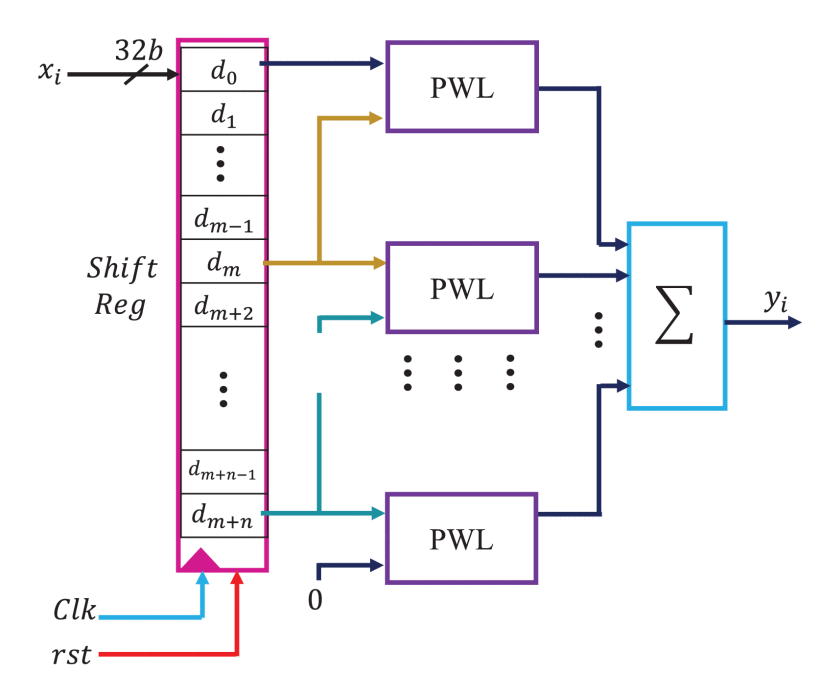
Exploring the use of fractional calculus is essential for it to be used properly in various applications. Implementing the fractional operator Dα in FPGA is an important research topic in fractional calculus; in the literature, only a few FPGA implementations have been proposed due to the memory dependence of the fractional order systems. In this paper, FPGA implementations of fractional order
Fractional order integrator/differentiator: FPGA implementation and FOPID controller application
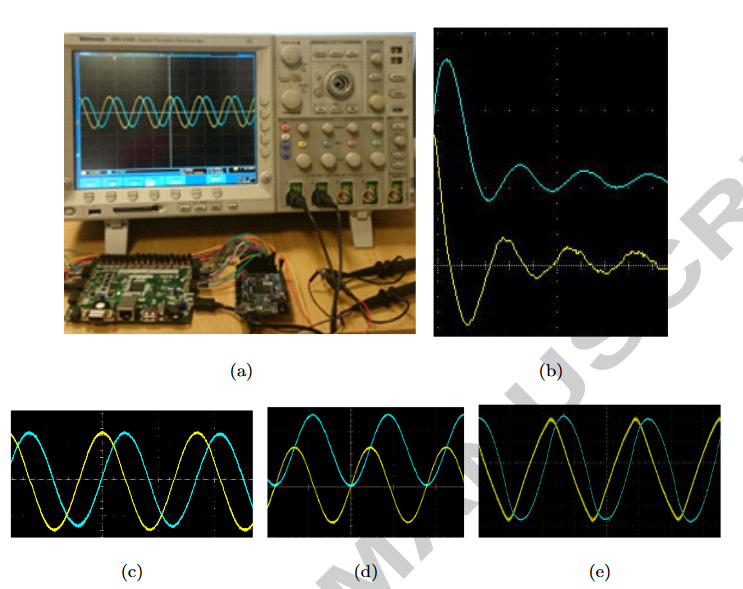
This paper introduces two FPGA based design approaches of the fractional order integrator and differentiator using Grünwald Letnikov (GL) definition where fixed window and linear approximation approaches are considered. The main advantage of the linear approximation method is that it reduces the huge memory of the fractional order systems. One of the top applications of fractional calculus is the
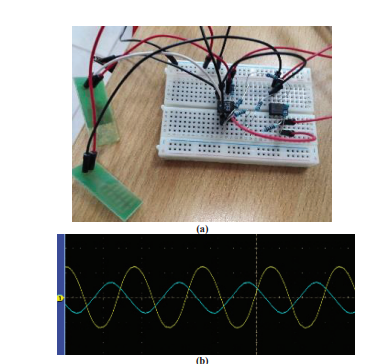
Fractional-Order Oscillators Based on Double Op-Amp
In this paper, complete analysis and design for fractional-order oscillators based on double Op-Amp are presented. The fractional order parameters enrich the oscillator design by offering the extra degree of freedom which adds more flexibility to the design. Two oscillators with double op-Amp are introduced. The oscillation frequency, condition, phase difference and the characteristic equation for
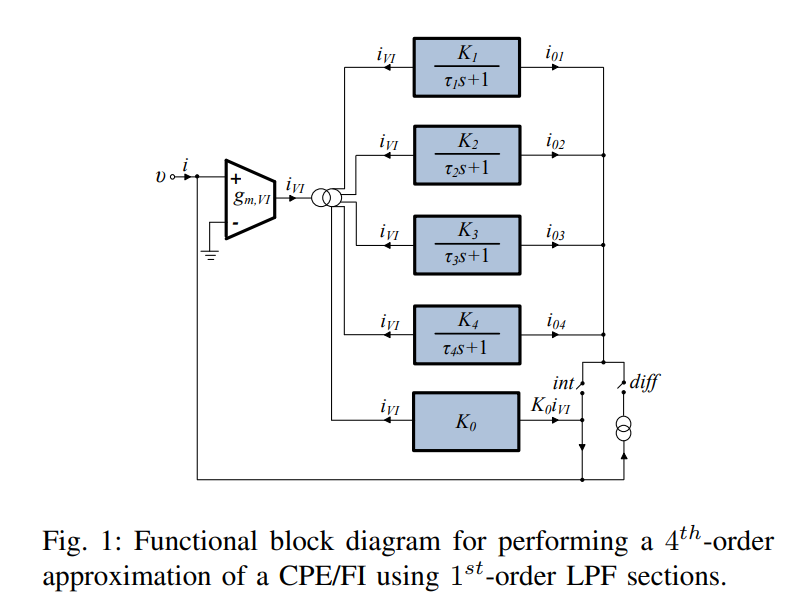
Log-domain implementation of fractional-order element emulators
Novel fractional-order capacitor and inductor em-ulators are presented in this work, which offer fully electronic tunability of their characteristics and, simultaneously, reduced circuit complexity compared to those already introduced in the literature. This has been achieved through the utilization of the log-domain filtering for implementing the approximation of the required fractional-order
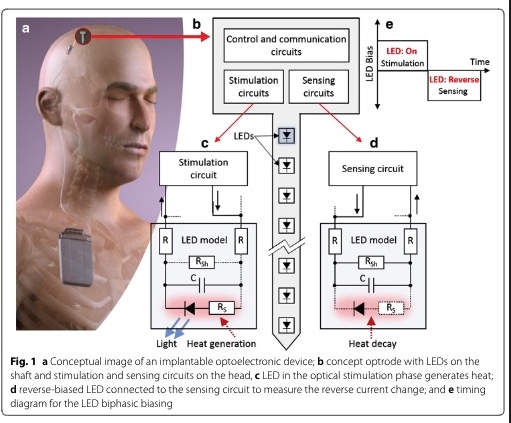
A current-mode system to self-measure temperature on implantable optoelectronics
Background: One of the major concerns in implantable optoelectronics is the heat generated by emitters such as light emitting diodes (LEDs). Such devices typically produce more heat than light, whereas medical regulations state that the surface temperature change of medical implants must stay below + 2 °C. The LED's reverse current can be employed as a temperature-sensitive parameter to measure