
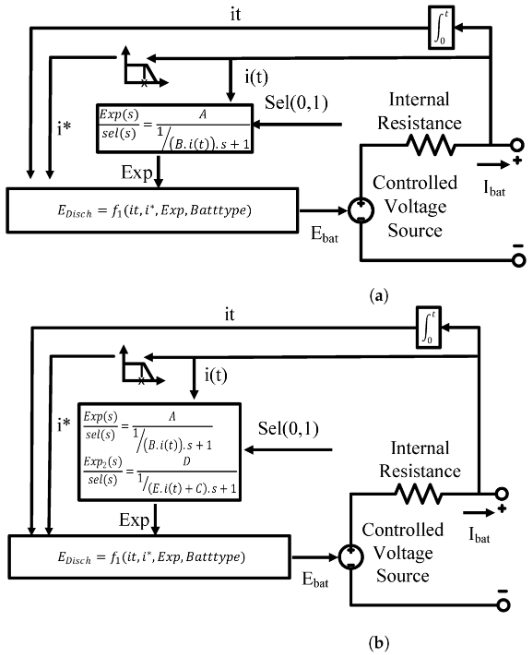
Parameter Identification of Li-ion Batteries: A Comparative Study
Lithium-ion batteries are crucial building stones in many applications. Therefore, modeling their behavior has become necessary in numerous fields, including heavyweight ones such as electric vehicles and plug-in hybrid electric vehicles, as well as lightweight ones like sensors and actuators. Generic models are in great demand for modeling the current change over time in real-time applications. This paper proposes seven dynamic models to simulate the behavior of lithium-ion batteries discharging. This was achieved using NASA room temperature random walk discharging datasets. The efficacy of

Fractional Order Systems: Optimization, Control, Circuit Realizations and Applications
Fractional Order Systems: Optimization, Control, Circuit Realizations and Applications consists of 21 contributed chapters by subject experts. Chapters offer practical solutions and novel methods for recent research problems in the multidisciplinary applications of fractional order systems, such as FPGA, circuits, memristors, control algorithms, photovoltaic systems, robot manipulators, oscillators, etc. This book is ideal for researchers working in the modeling and applications of both continuous-time and discrete-time dynamics and chaotic systems. Researchers from academia and industry who
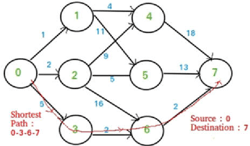
Comparison of Parallel and Serial Execution of Shortest Path Algorithms
Shortest Path Algorithms are an important set of algorithms in today's world. It has many applications like Traffic Consultation, Route Finding, and Network Design. It is essential for these applications to be fast and efficient as they mostly require real-Time execution. Sequential execution of shortest path algorithms for large graphs with many nodes is time-consuming. On the other hand, parallel execution can make these applications faster. In this paper, three popular shortest path algorithms-Dijkstra, Bellman-Ford, and Floyd Warshall-Are both implemented as serial and parallel programs

Indoor Air Quality Monitoring Systems for Sustainable Medical Rooms and Enhanced Life Quality
Indoor air pollution poses a substantial risk to human health and well-being, underscoring the crucial requirement for efficient monitoring systems. This paper introduces an advanced Air Pollution Monitoring System (APMS) tailored explicitly for indoor settings. The APMS integrates sensors and a user interface, ensuring the delivery of real-time and precise data concerning air quality parameters such as particulate matter (PM), volatile organic compounds (VOCs), carbon dioxide (CO2), as well as temperature and humidity. The proposed APMS has several advantages, including low maintenance
Wastewater Treatment: Recycling, Management, and Valorization of Industrial Solid Wastes
Wastewater Treatment: Recycling, Management, and Valorization of Industrial Solid Wastes bridges the gap between the theory and applications of wastewater treatments, principles of diffusion, and the mechanism of biological and industrial treatment processes. It presents the practical applications that illustrate the treatment of several types of data, providing an overview of the characterization and treatment of wastewaters, and then examining the different biomaterials and methods for the evaluation of the treatment of biological wastewaters. Further, it considers the various types of
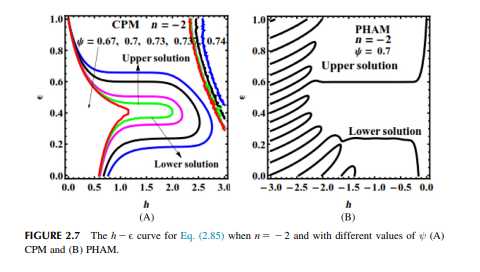
Nonlinear fractional order boundary-value problems with multiple solutions
It is well-known that discovering and then calculating all branches of solutions of fractional order nonlinear differential equations with boundary conditions can be difficult even by numerical methods. To overcome this difficulty, in this chapter two semianalytic methods are presented to predict and obtain multiple solutions of nonlinear boundary value problems. These methods are based on the homotopy analysis method (HAM) and Picard method namely, predictor HAM and controlled Picard method. The used techniques are capable of predicting and calculating all branches of the solutions
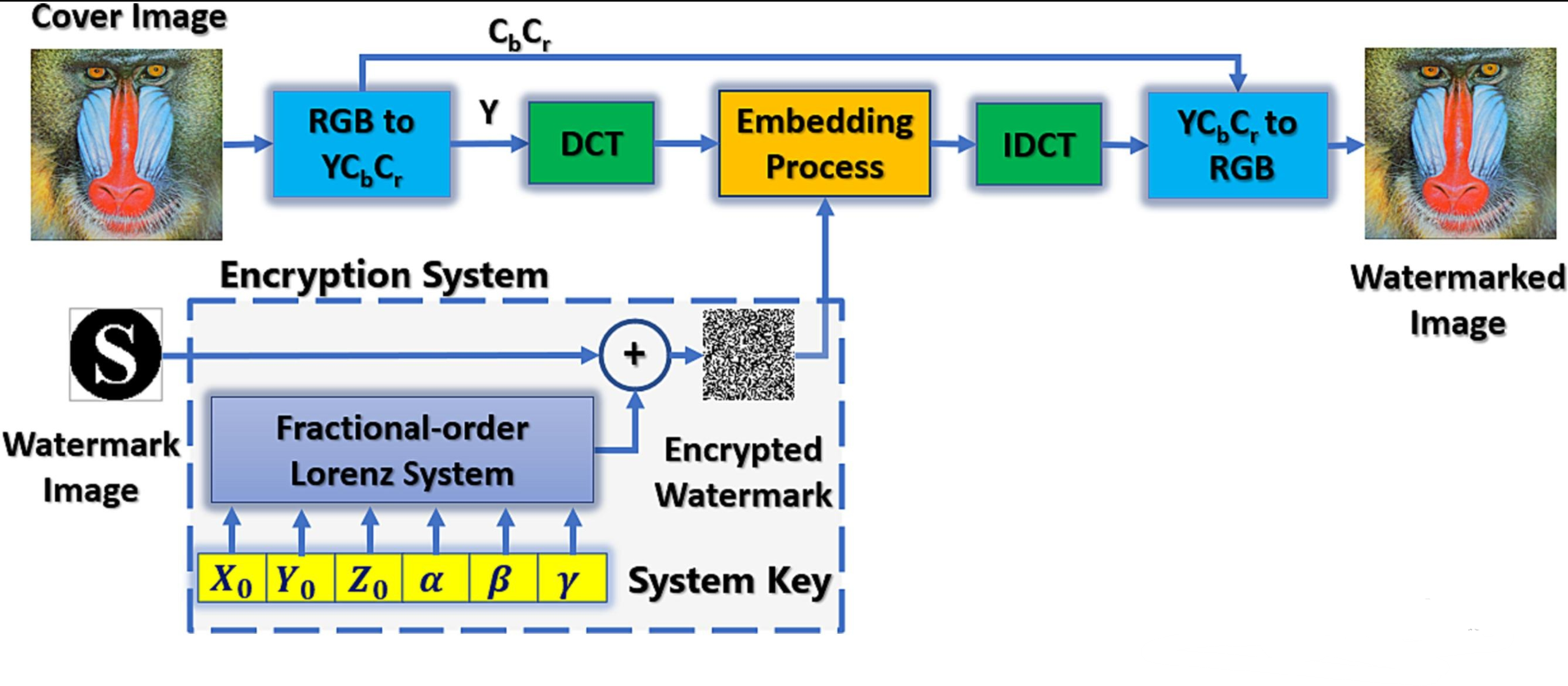
Secure blind watermarking using Fractional-Order Lorenz system in the frequency domain
This paper investigates two different blind watermarking systems in the frequency domain with the development of a Pseudo Random Number Generator (PRNG), based on a fractional-order chaotic system, for watermark encryption. The methodology is based on converting the cover image to the YCbCr color domain and applying two different techniques of frequency transforms, Discrete Cosine Transform (DCT) and Discrete Wavelet Transform (DWT), to the Y channel. Then, the encrypted watermark is embedded in the middle-frequency band and HH band coefficients for the DCT and DWT, respectively. For more
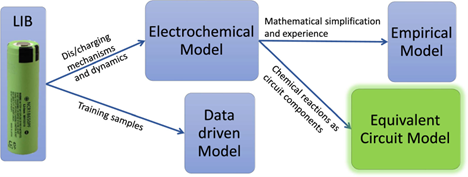
Fractional-Order Equivalent-Circuit Model Identification of Commercial Lithium-Ion Batteries
The precise identification of electrical model parameters of Li-Ion batteries is essential for efficient usage and better prediction of the battery performance. In this work, the model identification performance of two metaheuristic optimization algorithms is compared. The algorithms in comparison are the Marine Predator Algorithm (MPA) and the Partial Reinforcement Optimizer (PRO) to find the optimal model parameter values. Three fractional-order (FO) electrical equivalent circuit models (ECMs) of Li-Ion batteries with different levels of complexity are used to fit the electrochemical

A (k,n)-Secret Image Sharing With Steganography Using Generalized Tent Map
Secret Image Sharing (SIS) transfers an image to mutually suspicious receivers as n meaningless shares, where k or more shares must be present to recover the secret. This paper proposes a (k, n)-SIS system for any image type using polynomial interpolation based on Lagrange polynomials, where the generated shares are of size 1/k of the secret image size. A full encryption system, consisting of substitution and permutation stages, is employed by using the generalized Tent map as a source of randomness. In addition to using a long and sensitive system key, steganography using the Least
Interdigitated C-Patch Metamaterial Antenna for Terahertz Sensing
This paper proposes a metamaterial Terahertz sensor with detected sensitivity for biomedical applications. The proposed sensor consists of two interdigitated golden C-shaped structures on top of Teflon substrate that is backed by a gold layer. The absorption spectrum contains a peak resonance corresponding to the maximum absorption of the sensor. The proposed sensor has a maximum narrow-band absorption at 3.35 THz, with an average sensitivity of 2.256 THz/RIU and a quality factor of 22.3. The developed model is checked for the range of refractive index range between n= 1.3 to n= 1.4 to check