
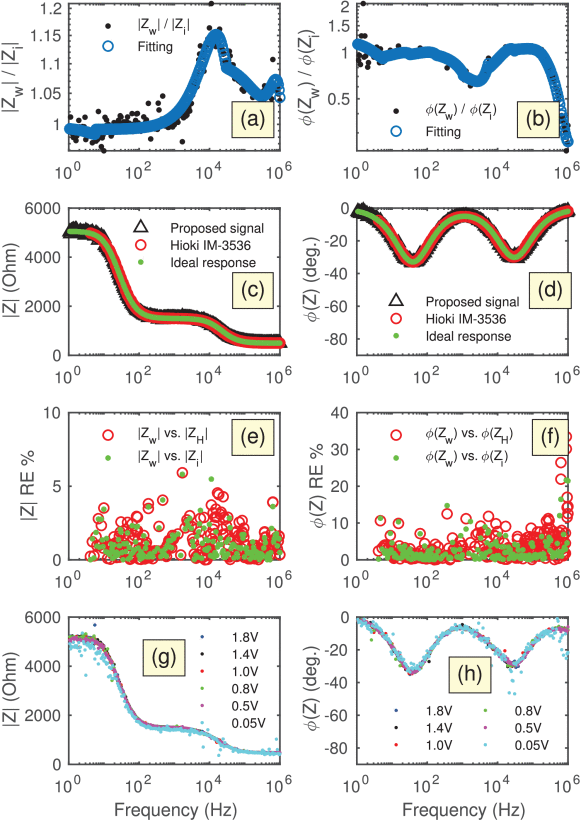
Time-Frequency Design of a Multi-Sine Excitation with Random Phase and Controllable Amplitude for (Bio) Impedance Measurements
Impedance spectroscopy has become a standard electroanalytical technique to study (bio)electrochemical and physiological systems. From an instrumentation point of view, the measurement of impedance can be carried out either in the frequency domain using the classical frequency sweep method or in the time domain using a variety of broadband signals. While time-domain techniques can be implemented with relatively simple hardware and can achieve faster acquisition time, they are still not that popular because of their lower accuracy and modularity. In this work we present a method and an
Review on Coral Reef Regeneration Methods through Renewable Powered Electrotherapy
The restoration of coral reef population in coastal regions is currently a growing concern. Many attempts have been made to apply new approaches to limit the deterioration of coral reefs, and to accelerate the growth of new reefs to protect coastal areas and ecosystems using available renewable energy sources. This paper highlights the new approaches and their various advantages and limitations in tidal and wave energy. The paper also suggests improvements to some of those systems using the recent developments in soft robotics, especially the use of biomimetic fish as a feasible support
Bio-inspired adsorption sheets from waste material for anionic methyl orange dye removal
Abstract: Nano zero-valent iron (nZVI), bimetallic nano zero-valent iron-copper (Fe0–Cu), and Raw algae (sargassum dentifolium) activated carbon-supported bimetallic nano zero-valent iron-copper (AC-Fe0–Cu) are synthesized and characterized using FT-IR, XRD, and SEM. The maximum removal capacity is demonstrated by bimetallic activated carbon AC-Fe0–Cu, which is estimated at 946.5 mg/g capacity at the condition pH = 7, 30 min contact time under shaking at 120 rpm at ambient temperature, 200 ppm of M.O, and 1 g/l dose of raw algae-Fe0–Cu adsorbent. The elimination capability of the H3PO4
Di- and tri- cyclic aromatic hydrocarbons removal using different prepared materials based Sargassum dentifolium algae, and iron oxide
Polycyclic aromatic hydrocarbons (PAHs) are highly toxic and carcinogenic compounds as they are low water solubility, hardly degradable and may persist in the environment for many years. Therefore, this study was directed to PAHs ‘anthracene and naphthalene’ removal using a combination method between adsorption and degradation using sunlight. Three adsorbent materials, iron oxide (Fe) alone, Sargassum dentifolium (S) alone, and mixture of Iron oxide and Sargassum dentifolium (FeS) were prepared. Afterwards, optimisation process was performed for the three adsorbent forms through some
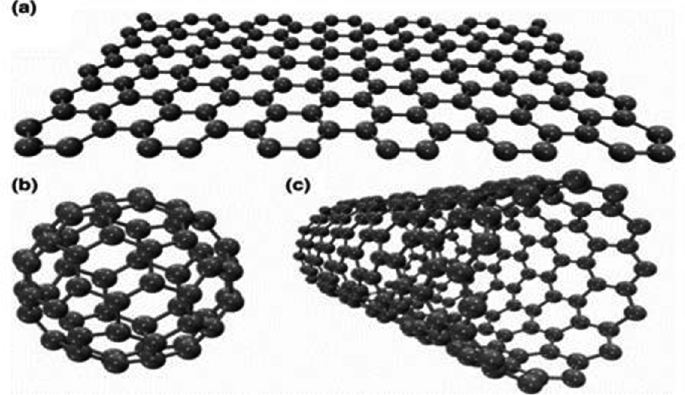
Carbon Nanomaterials and Their Composites as Adsorbents
Carbon nanomaterials with various nanostructures (carbon nanotubes, graphene, graphene oxide, fullerene, nano diamonds, carbon quantum dots, carbon nanofibers, graphitic carbon nitrides, and nano porous carbons) are the decade’s most distinguishing and popular materials. They have distinctive physicochemical qualities such as chemical stability, mechanical strength, hardness, thermal and electrical conductivities, and so on. Furthermore, they are easily surface functionalized and tweaked, modifying them for high-end specific applications. Carbon nanostructures’ properties and surface
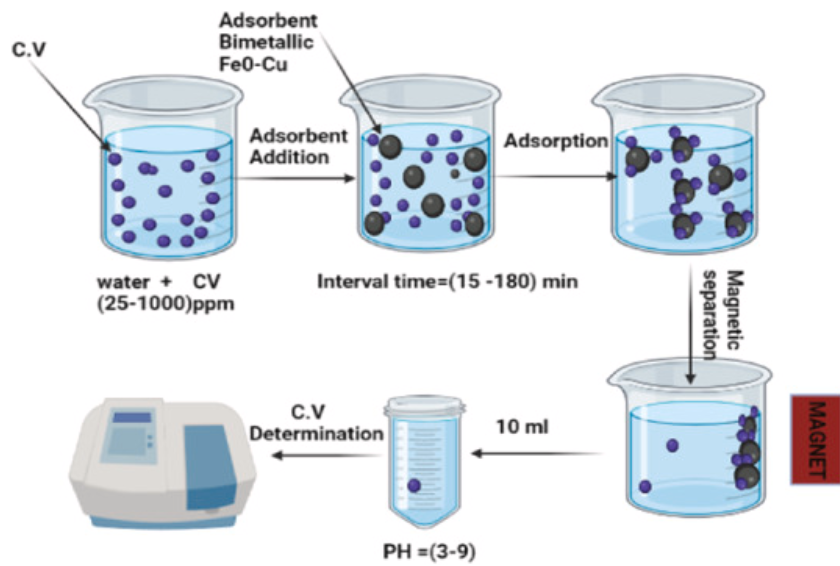
Crystal violet removal using bimetallic Fe0–Cu and its composites with fava bean activated carbon
Nano zero-valent iron (nZVI), bimetallic nano zero-valent iron-copper (Fe0– Cu), and fava bean activated carbon-supported bimetallic nano zero-valent iron-copper (AC-Fe0-Cu) are synthesized and characterized using DLS, zeta potential, FT-IR, XRD, and SEM. The maximum removal capacity is demonstrated by bimetallic Fe0–Cu, which is estimated at 413.98 mg/g capacity at pH 7, 180 min of contact duration, 120 rpm shaking speed, ambient temperature, 100 ppm of C.V. dye solution, and 1 g/l dosage. The elimination capability of the H2SO4 chemical AC-Fe0-Cu adsorbent is 415.32 mg/g under the same
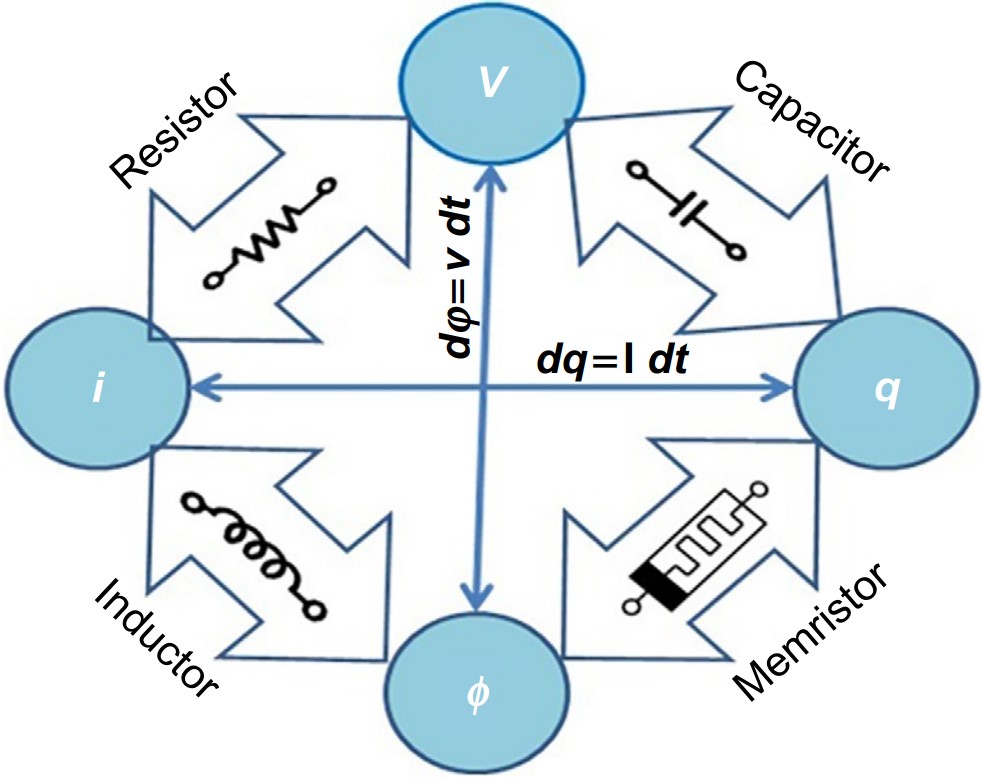
Memristive Fractional-Order Nonlinear Model for Circuit Design
The main objective of this chapter is to bring together studies addressing the current research and history of memristive device evolution available in the literature. The chapter highlights the methodologies and frameworks relevant to the development of nonlinear memristor models suitable for future nanoscale circuit design. An elaborate study of memristor device physics, structure, operation, mathematical modeling, and TCAD simulations is carried out for better understanding of nonlinear models of memristive devices. The memristive device features and content related to memristor nonlinear
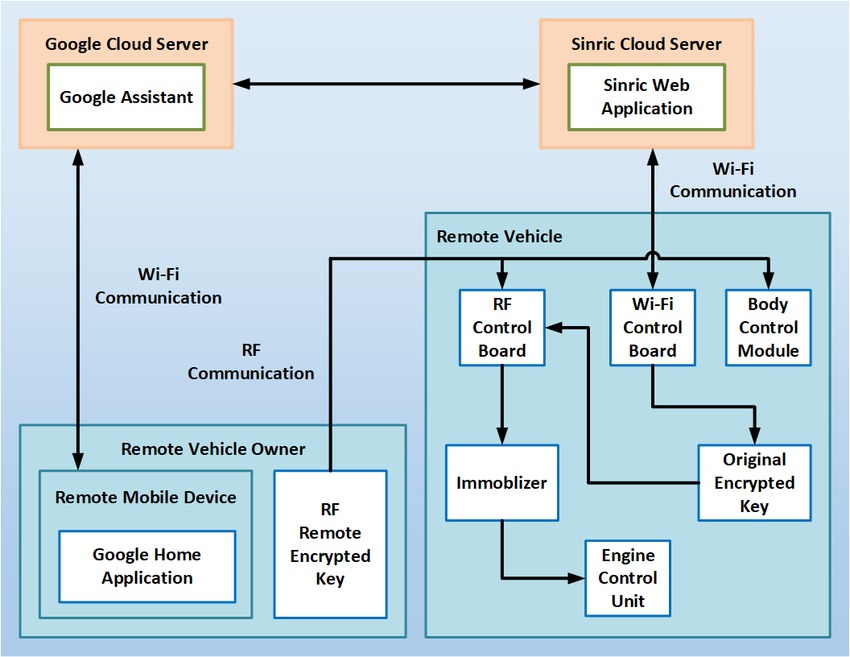
A Reliable Secure Architecture for Remote Wireless Controlling of Vehicle's Internal Systems based on Internet of Vehicles using RF and Wi-Fi
Internet of Vehicles is considered one of the most unprecedented outputs of the Internet of Things. No one has realized or even expected the rapidly-growing revolution regarding autonomous connected vehicles. Nowadays, Internet of Vehicles is massively progressing from Vehicular Ad-Hoc Networks as a huge futuristic research and development discipline. This paper proposes a novel reliable and secure architecture for ubiquitously controlling remote connected cars' internal systems, such as engine, doors' locks, sunroof, horn, windows' and lights' control systems. The main contribution is that
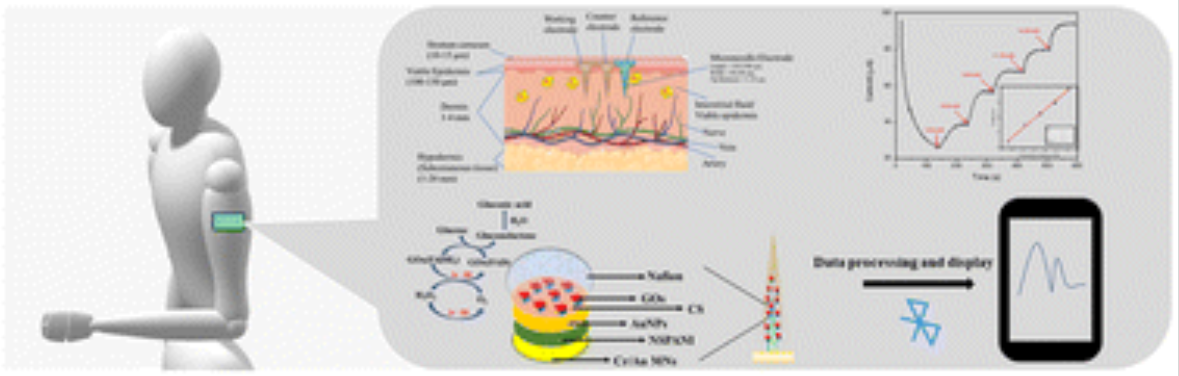
Early detection of hypo/hyperglycemia using a microneedle electrode array-based biosensor for glucose ultrasensitive monitoring in interstitial fluid
Diabetes is a common chronic metabolic disease with a wide range of clinical symptoms and consequences and one of the main causes of death. For the management of diabetes, painless and continuous interstitial fluid (ISF) glucose monitoring is ideal. Here, we demonstrate continuous diabetes monitoring using an integrated microneedle (MN) biosensor with an emergency alert system. MNs are a novel technique in the field of biomedical engineering because of their ability to analyze bioinformation with minimal invasion. In this work we developed a poly(methyl methacrylate) (PMMA) based MN glucose
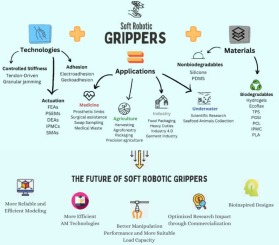
Soft robotic grippers: A review on technologies, materials, and applications
The growing need for manipulators capable of handling delicate objects with care and coexisting safely with humans has brought soft robots to the forefront as a practical and cost-effective solution. In this context, this paper aims to explore soft grippers, a unique and versatile subset of soft robots. It provides an overview of various soft grasping techniques and materials, highlighting their respective advantages and limitations, along with showcasing several designed and tested models. As medicine and agriculture are acknowledged as pivotal domains required for basic human survival, this